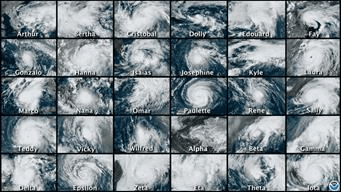
Forecasted attribution of the human influence on Hurricane Florence
Article: The politics of zero-sum thinking: The relationship between political ideology and the belief that life is a zero-sum game
The politics of zero-sum thinking: The relationship between political ideology and the belief that life is a zero-sum game
Articles as of 12/16/19
All-Hazards:
- Emergency Response System in Maine on the Verge of Collapsing (EM /Gov Tech)
- Summer Firefighting Costs Exceed $300 Million in Alaska (EDM Digest)
- Two of the Biggest US Earthquake Faults Might Be Linked (HS Today)
- This Is What A Devastating Earthquake In California Would Look Like (LA Times)
- Harnessing Nature’s Defenses against Tsunamis (HSNW)
- Updated USGS Model Puts East And South Bay In Jeopardy Of Catastrophic Quake (SFist)
Resilience:
- Will Climate Change lead to a ‘Fiscal Tsunami’? (Governing)
- World Bank to Support Bulgaria In Collecting Catastrophe Data, Developing National Risk Management Plan (Relief Web)
- Florida Senate Addressing Proposal to Tackle Rising Sea Levels (EM Gov Tech)
- Conserving the Floodplains Could Save Billions of Dollars (EM Gov Tech)
Public Health / Biosurveillance:
- Flu Now Widespread In Nearly Half Of States (CIDRAP)
- Chemical Weapons and Public Health: Assessing Impact and Responses (Journal of Public Health)
- HHS Invests in Modernizing U.S. Manufacturing Capacity for Pandemic Influenza Vaccine (HHS)
- Caribbean Disaster Emergency Management Agency and Caribbean Center for Disaster Medicine Establish Partnership to Improve Region’s Healthcare Preparedness (BusinessWire)
Critical Infrastructure & Cyber:
- Cybersecurity Getting More Complex For State Governments (State Scoop)
- How Transparent Should Local Governments Be After a Cyberattack? (Gov Tech)
- Pilot Will Look at Cascading Consequences During Disaster (EM/Gov Tech)
- FEMA Wants a Piece of the PG&E Wildfire Victim Settlement Pie (EM/Gov Tech)
- NG911 Self-Assessment Tool Helps Agencies Assess Readiness (911.gov)
Innovations & Interconnections(?…!):
- Tornado prediction: Low Frequency Sound May Predict Tornado Formation (HSNW)
- Food System Collapse (Nature: Climate Change)
- NASA Sponsors “xView2 Challenge:” Automatically Assess Damaged Buildings After a Disaster (NASA)
Rt Fifty article: The economic value of recreation
Articles from the week of 10/17/19
Socioeconomic Effects of Coastal Flooding in California (HSNW)
Floods: With Coastal Waters Rising: First-Ever National Assessment of FEMA Buyouts (HSNW) A new study is the first to examine nationwide data on FEMA’s buyout program.
PG&E Put the Burden of Halting Fires on Millions of Californians (EM / Gov Tech) …the biggest planned power outage in state history leaves a flurry of questions: What really created this mess — climate change, drought and building too close to wildlands jacking up fire danger, or incompetence by PG&E? What can be done to prevent shut-offs, or to at least conduct them better?
Zombie Prep, Emergency Prep: FEMA Partners with Sony for ‘Zombieland’ PSA (HS Today) ‘“Zombies don’t plan ahead. You can. Make your emergency plan.”’
What’s Your Landslide Risk? USGS Maps Out Danger in New Database (HS Today) The U.S. Geological Survey today unveiled a new web-based interactive map that marks an important step toward mapping areas that could be at higher risk for future landslides. In collaboration with state geological surveys and other federal agencies, USGS has compiled much of the existing landslide data into a searchable, web-based interactive map called the U.S. Landslide Inventory Map.
FBI Says Don’t Pay the Ransom (FEMA) FBI urges all individuals or organizations that have been infected with ransomware not to pay the ransom but, instead, to contact their local FBI field office and report the incidents to the FBI Internet Crime Complaint Center (IC3) www.ic3.gov as soon as possible.
How Texas Used Its Disaster Playbook After A Huge Ransomware Attack (State Scoop)
Overcoming Challenges of Hospital Preparedness Plans (Dom Prep)
Richer Nations Urged To Boost Protection Against Wild Weather As Losses Jump (Reuters)
Best Practices for State And Local Governments To Improve Natural Disaster Preparedness (Am. City & County)
Algorithm Projects Final Size of Wildfire Just After Start (Governing)
The Next Big Technology to Transform Government (Governing)
It’s called blockchain. Some say it will have a bigger impact than the Internet.
Fireproofing: Whole-House Fire Blanket Protects Buildings from Short Wildfires (HSNW)
Floods: With Coastal Waters Rising: First-Ever National Assessment of FEMA Buyouts (HSNW) A new study is the first to examine nationwide data on FEMA’s buyout program.
School Safety: Keeping Students Safe Is a Growth Industry Struggling to Fulfill Its Mission (HSNW)
What Will Happen to Bay Area Refineries When the ‘Big One’ Hits? (EM / Gov Tech)
Earthquakes Still Surprise Us, Even with All the Science (EM / Gov Tech)
Unprecedented movement detected on California earthquake fault capable of 8.0 (LA Times)
Bank Regulators Present a Dire Warning of Financial Risks From Climate Change (NY Times) “The associated risks and effects of climate change are relevant considerations for the Federal Reserve,” according to the director of the San Francisco Fed’s Center for Community Development Investments.
As Waters Rise, So Do Concerns For Sports Teams Along Coast (Wash Post) Editor’s Note: This could be considered a case-study example of the financial battle between the Public and Private sectors over who receives the “benefits” of a project and who takes on the “costs.” (John Vocino)
Note: as water in the atmosphere rises with rising temps, it could create more rainouts for outdoor sports in the US (Baseball, Soccer, Football). Could this create greater demand for domed-stadium – especially a demand by leagues and teams to (e.g.: MLB) demand that their communities pay for these next-gen facilities? It would be an easy-to-understand example of corporations socializing the costs onto the public, while capitalizing the benefits for themselves.
Insightful article! But…
“’You missed a spot!”’
Unfortunately, this article is short on the issue of financial risk and cost burdens. The article identifies the multi-million dollar price tags for some recently build stadia. But that leaves the reader to think that it is the pro teams that have spent their own capital to build the existing facilities, or will pony-up to build these new ones.
Not so much.
As we’ve seen right here in Washington DC, the upfront costs were borne on the locality, not to mention ownership periodically returning to the original deal when it wants stadium upgrades or the community to cover the costs of upgrades to the surrounding infrastructure.
By adding that additional data point, we now have an easy-to-understand example of corporations socializing the costs onto the public, while capitalizing the benefits for themselves.
Prof. Vocino
National Homeland Security Consortium Releases State Case Studies on HSGP Effectiveness (NEMA)
Article: “Costs of natural disasters are increasing at the high end”
Article: Diseases like West Nile, EEE and flesh-eating bacteria are flourishing due to climate change
Diseases like West Nile, EEE and flesh-eating bacteria are flourishing due to climate change
Article – food for thought…
Disaster management issues are looked by many, many different actors with different lenses:
“What has so often excited wonder [is] the great rapidity with which countries recover from a state of devastation; the disappearance, in a short time, of all traces of the mischiefs done by earthquakes, floods, hurricanes, and the ravages of war.”
Fall 2019 – UDC Wed class discussion on National Household Survey
OK Students – Let’s discuss the results of this survey. Here’s some questions to lead us off:
So, what? — what does this mean?
What are the 2 or 3 most important issues this study point out, in your opinion.
Then, given your thought on the above questions, what do we (which ‘we’ are you talking about…) do about these important issues?
National Household Survey – FEMA Report
FEMA released the results from the 2018 National Household Survey (NHS), which measures individuals’ attitudes and behaviors regarding preparedness and assesses what influences them to begin preparing for a future hazard. Every year, FEMA surveys the American public to assess how the culture of personal disaster preparedness and resilience has changed over time. Approximately 5,000 adults in the U.S. were surveyed in both English and Spanish. The survey includes both a nationally representative sample and hazard-specific oversamples, including tornadoes, floods, hurricanes, wildfires, earthquakes and urban events. Visit the FEMA website (https://community.fema.gov/AP_2018_National_Household_Survey) for more information and a full list of results. For more about preparedness research, please visit Ready.gov (https://www.ready.gov/preparedness-research).
 From Brassville to... (working title)