Featured

Articles & resources 4/17/2020

Resources

Scams in the News – FTC Issue Warning About Coronavirus (COVID-19) Scams (GAO Notices) While the world is trying to take better care of themselves, cybercriminals are trying to seize the opportunity by creating COVID-19 scams. Here are a few tips that you should consider regarding COVID-19 scams:

·         If you receive any robocalls regarding at home techniques, do not press any buttons! Simply hang up the call.

·         Do not click on any links in emails that are advertising COVID-19 home test kits or vaccinations.

·         Be cautious with any emails that claim to be from the Centers for Disease Control and Prevention (CDC) or any expert saying they have information about the virus.

If you suspect that you have received a suspicious email at GAO, report it immediately by using the Report Phishing button in Outlook.


Community Resilience Indicator Analysis (CRIA) and Resilience Analysis and Planning Tool (RAPT) (FEMA) The Resilience Analysis and Planning Tool is available to the public. FEMA released expanded capabilities to the Resilience Analysis and Planning Tool, including census tract data and additional infrastructure layers for all state, local, tribal and territorial jurisdictions across the nation. This update to the tool enables a more granular analysis of community resilience indicators and allows users to calculate the population of individuals with specific indicator characteristics in selected census tracts.  Supporting documents and information on scheduled webinars can be found on the FEMA website.

Hospital Experiences Responding to the COVID-19 Pandemic: Results of a National Pulse Survey March 23-27, 2020  (DHS OIG) Hospitals reported that their most significant challenges centered on testing and caring for patients with COVID-19 and keeping staff safe. Hospitals said that severe shortages of testing supplies and extended waits for test results limited hospitals’ ability to monitor the health of patients and staff. They also reported that widespread shortages of personal protective equipment (PPE) put staff and patients at risk. This report is based on brief telephone interviews (“pulse surveys”) conducted March 23-27, 2020, with hospital administrators from 323 hospitals across 46 States, the District of Columbia, and Puerto Rico that were part of our random sample. Our rate of contact was 85 percent.

Emergency and Disaster Management Case Study: Standing Panel on Intergovernmental Systems, March 2020; National Academy for Public Administration (NAPA).  The NAPA study articulates what has been learned from past experiences to inform the necessary transformation of roles and restructuring of responsibilities to support emergency management systems that can realize the objectives of effective and efficient prevention, preparedness, response and recovery to the broadest array of natural disasters possible. Also see FY19_ALL_STAFF-#1489088 in our EM CoP Resources folders.

IBM Watson Assistant for Citizens Answers COVID-19 Questions (Governing) To help agencies address situations, IBM has specifically designed a virtual assistant, Watson Assistant for Citizens, that is pre-loaded to understand and respond to common questions about COVID-19 directly leveraging CDC guidance. Additionally, agencies can customize unique intents leveraging other important information–via voice calls and digital text channels–to quickly help citizens get answers and stay informed.

FEMA Releases BRIC Policy for Comment (FEMA) The Federal Emergency Management Agency (FEMA) is accepting comments on the Building Resilient Infrastructure and Communities Policy. This policy describes a new program authorized by recent legislation that allows FEMA to set aside 6 percent of estimated disaster expenses for each major disaster to fund a mitigation grant program to assist States, territories, Tribes, and local governments. The new program would supersede the existing Pre-Disaster Mitigation grant program and would promote a national culture of preparedness through encouraging investments to protect communities and infrastructure and strengthening national mitigation capabilities to foster resilience.  A copy of FEMA’s policy is in the EM CoP Resources folder, DM file # FY19_ALL_STAFF-#1504931


Articles

All-Hazards:

·         Compliance Considerations for Companies and Individuals Donating Funds, Goods, or Services to Domestic Government Entities (Inside Political Law)

·         Pa. Only Shares COVID-19 Information with Some Counties (Governing)

·         Cities Are Flouting Flood Rules. The Cost: $1 Billion (NY Times)

·         He Spent $500,000 to Buy Coronavirus Tests. Health Officials Say They’re Unreliable (Rt. Fifty)


Resilience:

·         FEMA Publishes Stakeholder Feedback For New Pre-Disaster Hazard Mitigation Program (IAEM)

·         Firefighters Say Coronavirus Will Obstruct Emergency Service, Evacuations As Wildfire Season Closes In (CNBC)

·         How Can Big Cities Adapt To Risks Of Floods? (Euronews)


Public Health / Biosurveillance:

·         Black Americans Face Higher Rates of Coronavirus Infection (Rt. Fifty)

·         Competing Hospitals Cooperate to Meet the Crisis (Pew Stateline)

·         Exercise in 2018 Informing Washington’s Coronavirus Crisis-Care (EM/Gov Tech)

·         Animal Viruses Are Jumping to Humans. Forest Loss Makes It Easier (NY Times)


Innovations & Interconnections and Deep Thoughts:

·         How Do We Ration Health Care When We Really Have To Do It? (EDM Digest)

·         New Mathematical Models May Help Us Predict The Spread Of Future Epidemics (BBC Science Focus)

·         Small, Mid-Sized Cities Currently Cut Out of Direct Coronavirus Funding (Rt. Fifty)


Featured

First blog post

This is the post excerpt.

The purpose of this blog is to provide myself a platform for retaining information, ideas, etc.*, mainly in the areas we shall refer to as:

Professor Vocino:  Adjunct Professor, University of the District of Columbia, Washington, D.C. (2015 to present). Expertise: disaster management, U.S. emergency preparedness and disaster resilience.;

Coach John: Assistant (volunteer) Coach, Eastern HS, Washington, D.C. / Principal: Red/White/Blue-HardBall (Baseball, Slo-pitch, Fastpitch Softball) program –


*Included but not limited to: observations, insights, factiods, epiphanies, bad ideas, unfinished thoughts, sniglets, incomplete sentences, fuzzy reminiscences of what i learned in college –  that i didn’t recall ever paying attention to before–  deconstructed concepts, personal revisionist histories, lists of what i want to be when i grow up, hopeless fears and fearless hopes. )

post

How do governance frameworks operate and what can major public projects gain from them?

https://theconversation.com/how-do-governance-frameworks-operate-and-what-can-major-public-projects-gain-from-them-285686

“‘…governance framework refers to the systems, processes, and regulations government implement to improve the likelihood of projects being delivered according to plan and within an allocated timeframe and budget. These frameworks determine who makes decisions, how projects are evaluated, what information is required before funding is approved, and how lessons are retained after completion.”

Suburban street design has driven emissions since WWII, study suggests

https://phys.org/news/2026-06-suburban-street-driven-emissions-wwii.html

Wow. What we’ve always thought, now verified and quantified: 

“‘…Suburbanization as a whole adds 0.26 metric tons of greenhouse gas emissions per person per year, and “‘… about 38%, of the environmental costs of suburbs.””

“The paper shows that a substantial share of the costs we attribute to ‘sprawl’ actually stem from street design…”‘ “Right now, the conversation is almost entirely about distance to downtown, and that matters, but an important and overlooked part of the costs comes from how neighborhoods were designed. The winding streets and cul-de-sacs turn what could be short, direct trips for grocery runs, errands and recreation into longer ones.”‘

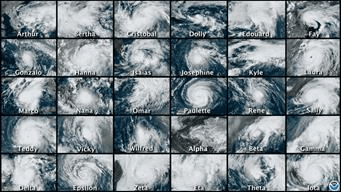
50-megapixel Earth models capture storms in unprecedented detail—but four consistent blind spots remain

https://phys.org/news/2026-06-megapixel-earth-capture-storms-unprecedented.html

As I’ve said: the history of disaster risk mapping is like going from the video game “Pong” to “Madden”

File under: “Nice ballpark.  Now, can you build is another- with a dome?”

American taxpayers have spent $33 billion on sports stadiums. They got fewer seats—and higher prices https://flip.it/KjUlOo

Courtesy of Fortune mag

“‘…Between 1970 and 2020, state and local governments spent $33 billion in public funds on major-league sports arenas across the U.S. and Canada—with the median public contribution covering 73% of construction costs. That number has only accelerated: In 2024 alone, more than $13 billion in taxpayer subsidies were proposed by teams across professional sports for new construction and renovations.””

Capitalism-caused climate change could further impact communities’ bottom line:  Pro teams will leverage  more public spending for new, domed stadiums to ensure owners’ revenue streams against weather disruptions and delays.   The costs will be socialized.

Our Financial System Is Working On A False Assumption That Nature Is Stable

https://www.forbes.com/sites/ninaseega/2026/06/11/our-financial-system-is-working-on-a-false-assumption-that-nature-is-stable/

“‘…The challenge is …a dangerous and systemic miscalculation of ecosystem fragility across the financial models that govern our economies.”‘

Inside the war to sideline stronger climate science, before it’s used in court – POLITICO

https://www.politico.com/news/2026/06/11/fossil-fuels-national-academies-climate-science-00897237

…In addition to collecting hundreds of emails and other documents from researchers involved in the National Academies report, the effort to find information that could be used to discredit attribution science is being pursued by Republicans lawmakers, think tank analysts allied with energy companies and offshoots of the industry itself …

The Rising Cost of Climate-Driven Natural Disasters Since 1980

https://www.visualcapitalist.com/sp/ig02-rising-cost-of-climate-driven-natural-disasters-since-1980/

“‘…

On top of rising costs, climate disasters are also becoming more frequent. While there were just 33 billion-dollar disasters in the 1980s, that number has steadily climbed. So far, the 2020s have set a record with 143 billion-dollar natural disasters that were climate driven.”‘

US’s deadliest volcano can destroy towns home to 60,000 within minutes | News World | Metro News

https://metro.co.uk/2026/05/29/uss-deadliest-volcano-can-destroy-towns-home-60-000-within-minutes-28566092/

Re Mt Ranier area and the increasing role of land use/transportation planning under the Mitigation  doctrine of disaster management

Heat waves are now everyday disasters. Governments need to do more to protect people

https://phys.org/news/2026-05-everyday-disasters-people.html

47 governments’ plans “‘… typically include early-warning systems, coordination between health and social authorities, and public messaging urging people to stay cool…”‘