This is why mitigation– especially land-use planning and permitting — need to be in the forefront of disaster management
Category: UDC Disaster Mgt course / Homeland Security Masters program
Sea Levels are Rising & Residents In These 10 Cities are in Denial – Climate Crisis 247
https://climatecrisis247.com/news/sea-levels-are-rising-residents-in-these-10-cities-are-in-denial/
Similar analysis was reported in late 2024. The phy.org article overlayed/cross-refeenced FEMA’s National Risk Index with public opinion data on those communities with high distrust of government.
How do governance frameworks operate and what can major public projects gain from them?
“‘…governance framework refers to the systems, processes, and regulations government implement to improve the likelihood of projects being delivered according to plan and within an allocated timeframe and budget. These frameworks determine who makes decisions, how projects are evaluated, what information is required before funding is approved, and how lessons are retained after completion.”
Suburban street design has driven emissions since WWII, study suggests
https://phys.org/news/2026-06-suburban-street-driven-emissions-wwii.html
Wow. What we’ve always thought, now verified and quantified:
“‘…Suburbanization as a whole adds 0.26 metric tons of greenhouse gas emissions per person per year, and “‘… about 38%, of the environmental costs of suburbs.””
“The paper shows that a substantial share of the costs we attribute to ‘sprawl’ actually stem from street design…”‘ “Right now, the conversation is almost entirely about distance to downtown, and that matters, but an important and overlooked part of the costs comes from how neighborhoods were designed. The winding streets and cul-de-sacs turn what could be short, direct trips for grocery runs, errands and recreation into longer ones.”‘
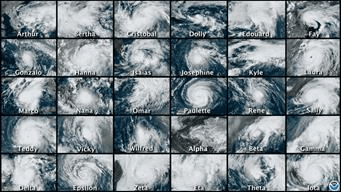
50-megapixel Earth models capture storms in unprecedented detail—but four consistent blind spots remain
https://phys.org/news/2026-06-megapixel-earth-capture-storms-unprecedented.html
As I’ve said: the history of disaster risk mapping is like going from the video game “Pong” to “Madden”
File under: “Nice ballpark. Now, can you build is another- with a dome?”
American taxpayers have spent $33 billion on sports stadiums. They got fewer seats—and higher prices https://flip.it/KjUlOo
Courtesy of Fortune mag
“‘…Between 1970 and 2020, state and local governments spent $33 billion in public funds on major-league sports arenas across the U.S. and Canada—with the median public contribution covering 73% of construction costs. That number has only accelerated: In 2024 alone, more than $13 billion in taxpayer subsidies were proposed by teams across professional sports for new construction and renovations.””
Capitalism-caused climate change could further impact communities’ bottom line: Pro teams will leverage more public spending for new, domed stadiums to ensure owners’ revenue streams against weather disruptions and delays. The costs will be socialized.
Our Financial System Is Working On A False Assumption That Nature Is Stable
“‘…The challenge is …a dangerous and systemic miscalculation of ecosystem fragility across the financial models that govern our economies.”‘
Inside the war to sideline stronger climate science, before it’s used in court – POLITICO
https://www.politico.com/news/2026/06/11/fossil-fuels-national-academies-climate-science-00897237
…In addition to collecting hundreds of emails and other documents from researchers involved in the National Academies report, the effort to find information that could be used to discredit attribution science is being pursued by Republicans lawmakers, think tank analysts allied with energy companies and offshoots of the industry itself …
Can AI help coastal cities prepare for rising seas and extreme events?
The Rising Cost of Climate-Driven Natural Disasters Since 1980
https://www.visualcapitalist.com/sp/ig02-rising-cost-of-climate-driven-natural-disasters-since-1980/
“‘…
On top of rising costs, climate disasters are also becoming more frequent. While there were just 33 billion-dollar disasters in the 1980s, that number has steadily climbed. So far, the 2020s have set a record with 143 billion-dollar natural disasters that were climate driven.”‘

