Article: Wetlands, not walls, may be key to managing flooding as sea levels rise
Wetlands, not walls, may be key to managing flooding as sea levels rise https://flip.it/tIzFML
Events, resources, articles 12/8/20
Training & Events
The Intergovernmental Audit Forums are offering these inaugural events to the community free of charge:
“COVID’s New Normal: Addressing Challenging Environments and Creating a Resilient and Agile Workforce” (Intergovernmental Audit Forums) Mountain and Plains (MPIAF)|Western (WIAF):
- Tuesday, December 8, 2020 3:00 pm – 5:00 pm (EST)
U.S. Vaccine Allocation Planner for COVID-19 (Intergovernmental Audit Forums) New York-New Jersey Intergovernmental Audit Forum (NYNJIAF)
- Thursday, December 10, 2020 3:00 – 4:00 p.m. (EST)
ESG Isn’t Enough: Bringing Science & Accuracy to Impact Measurement (Boundless Impact) As regulations tighten around climate, accurate and scientifically-validated climate impact measurement methods will be of utmost importance to companies and investors looking to comply with new standards and remain in good standing with increasingly savvy customers. Most Environmental, Social, and Governance (ESG) experts agree: there are quite a number of different definitions under this catch-all term. Luckily, new tools are emerging that incorporate cutting-edge science and data analytics into user-friendly tools for investors. These new tools are far more capable of making accurate predictions on which companies will be leading the market in the coming years.
- Wednesday, December 8th, 2020: 2:00pm – 3:00 pm EST
Solutions of the Year: Four Covid Innovations to Carry Forward (Next City) Next City sought out, and reported on, the ways that such disruptions could lead to lasting reform across sectors such as housing, drug treatment, education and criminal justice reform. We published more than 200 city-by-city responses to COVID-19; in doing so, we found the helpers that have made people’s lives easier. Join Next City as they dig into the long-term potential of four quick-pivot innovations: repurposing hotels as affordable housing; mobilizing methadone delivery during stay-at-home orders; training research librarians as contact tracers; and working with local businesses to supply incarcerated youth with books, games, and PPE to make their isolation bearable, safe and stimulating
- Wednesday, December 9, 2020, 1 p.m. ET
- Total Cost: $27.00
Water + Energy – Engage, Educate, Empower (SSF) This is the third Water-Energy Summit hosted by Security & Sustainability Forum (SSF’s) sustainability partner, Zpryme. During the WE3 Summit, connect global thought leaders who are embracing change and defining the dent that we should put in our water-energy future by focusing on the intersection of sustainable transformation, investment, innovative technology, and regulation for our economic recovery. Hear from top leaders from industry and government in the front lines of the transition to resilient infrastructure and economic vitality on a changing planet.
- Wednesday, December 9, 2020, 9:00 AM – Thu, Dec 10, 2020, 12:00 PM EST
- Cost: $0 – $99
Incorporating Sea Level Rise into a Capital Facilities Plan or Capital Infrastructure Plan (APA) This webinar will explore how to incorporate sea level rise and coastal hazards into the capital infrastructure or capital facilities planning process. In some cases, local planners are an integral part of the capital infrastructure planning process. Under these types of systems, planners can play an important role integrating sea level rise into the process of prioritizing and selecting projects to be included in the Capital Infrastructure Plan (CIP). In other jurisdictions, planners provide input but are not central in the development of a CIP. In these situations, planners can play a role influencing how sea level rise can be incorporated into the CIP process. We will be joined by planners in two different jurisdictions representing these two different approaches along with a planner from APA who prepared a Planning Advisory Service report (PAS 596) on Planning for Infrastructure Resilience. This is the fourth in our four-part webinar series exploring how local planners can understand and incorporate sea level rise projections into the planning process.
- Friday, December 11, 2020 1:00 PM – 2:30 PM ET
Webinar: Flood Risk Management Policy- Preview of Post-Election/2021 (Nat Flood Assoc) Join the National Flood Association as it continues its series of informative online sessions on topics that matter to our members and to the industry at large. We often hear the phrase “elections have consequences”. More than most, flood stakeholders appreciate how elections and regulatory changes can impact public policy relating to flood risk management. Join us for a 75-minute webcast to hear federal and state government relations experts discuss the potential impact of the 2020 election on flood risk management policy. Topics will include NFIP reform and reauthorization, relevant state legislative and regulatory developments and the increasing nexus between the housing finance market and issues relating to flood risk and climate change.
- Wednesday, December 16, 2020 3:00-4:15pm ET
COVID-19 Vaccine Logistics – Understanding the Distribution, Storage & Regulatory Requirements of Maintaining a Successful Medical Stockpile (NEMA) The response to COVID-19 is ongoing and will be complicated by the upcoming acquisition, storage, and distribution of a vaccine. To help work through some of these issues while states continue managing spikes in cases nationwide, this webinar will bring together federal, state, and private sector experts to explore areas of consideration. Among the topics will include the efficacy of medical countermeasures, ensuring compliance with FDA regulations, understanding the unique needs of the coming vaccine, and maintaining a successful medical stockpile. Hear form experts on the planning and logistics issues to ensure states are where they need to be early in 2021 including how CARES Act funding can still be utilized to assist in these efforts.
- Wednesday, December 16, 2020 at 2:00 PM EST.
Resources
New Manual Issued on COVID-19 Testing and Cross Border Risk (HS Today) The International Civil Aviation Organization (ICAO) has issued its new Testing and Cross-border Risk Management Measures Manual, developed by members of the CAPSCA group it established in 2009 for the prevention and management of public health events in civil aviation. The new publication is available free of charge on ICAO’s COVID-19 online portal. “This new risk management manual is designed to help countries assess and include personal tests as part of their overall air transport public health responses to COVID-19,” commented ICAO Secretary General Dr. Fang Liu.
CISA releases new Insider Threat Mitigation Guide (DHS/CISA) Organizations have a duty to protect themselves and their employees from unnecessary physical and cyber risks. Managing, detecting and preventing insider risk is everyone’s responsibility, and it is critical that efforts to manage this responsibility are tailored to each organization’s environment and its mission’s unique nature. CISA’s Insider Threat Mitigation webpage also offers an Insider Threat 101 fact sheet; Pathway to Violence video and fact sheet; and information for human resources departments on their role in identifying and preventing insider threats.
Articles
All-Hazards:
U.S. Lands Lost In Severe Wildfires Rising Over Decades (Reuters)
California’s ‘Trillion Dollar’ Mega Disaster–aka: ArkStorm–No One Is Talking About (ABC)
Plan Released To Reduce Massive Wildfires in US West (AP)
State Gets $1.3B in Wildfire Relief While Victims Get Nothing (Governing)
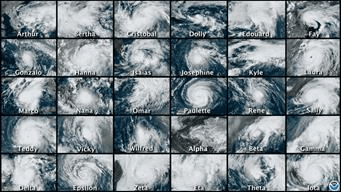
Here Are All 30 — Yes, 30 — Hurricanes and Tropical Storms That Hit the Atlantic In 2020 (Buzz Feed)
Once in a Lifetime Floods To Become Regular Occurrences By End Of Century (Phys.org)
‘Giant Volcano’ May Be Hidden Beneath Waters Off Alaska’s Southern Coast, Experts Say (SunHerald)
Climate Change Causes Landfalling Hurricanes to Stay Stronger for Longer (HS Newswire)
Resilience:
NIST “Playbook” Helps Communities with Resilience Planning (Dom Prep)
Public Health / Biosurveillance:
GAO: Urgent Pandemic Response Actions Needed (HS Today)
Johns Hopkins Report Details Lessons Learned From New York City Hospitals’ COVID-19 Patient Surge (Homeland Prep News)
NACCHO Releases Public Health Priorities for the Biden-Harris Transition Team and 117th Congress (Dom Prep)
Human Nature Thwarts Widespread Use of Apps Tracking Coronavirus Exposure (Ins Journal)
Critical Infrastructure & Cyber:
Bright Lights And Greener Pastures Ahead For Puerto Rico If Microgrids Keep Popping Up (Forbes)
Lawmakers Want Data to Decide the Future of America’s Electric Vehicle Charging Infrastructure (Rt. Fifty)
New Cyberattack Tricks Scientists into Making Dangerous Toxins, Synthetic Viruses (HS Newswire)
To Expand Broadband, States Should Figure Out Where It Isn’t Available (Rt. Fifty)
Innovations & Interconnections:
How to Fairly Use Algorithms to Make Tough Decisions (Rt. Fifty)
Articles and Resources: 12/1/20
Training & Events
Public Health 101 – How US Public Health Works (S&S Forum) What you need to know about the US public health systems in normal times and in times of crises. This webinar explores the federal, state, and local public health infrastructure in the United States and explains the roles and responsibilities of public health agencies and their interactions with the hospital system and emergency medical services. Speakers will also discuss the 10 essential services of public health that all communities should undertake.
- Wednesday, Dec 16, 2020 1:15 PM – 2:45 PM EST
Re-Writing Development Rules for Prosperity, Sustainability & Equity (GWU) Participants will learn innovative and effective policy solutions that can promote economic recovery without additional public spending or loss of revenue. This class addresses the market forces responsible for sprawl, poor housing options and economic decline. Attendees will learn that HOW we collect public revenue is just as important as HOW MUCH revenue we collect.
- Tuesday, January 12, 2020 10 am to 4 PM EDT
- Cost: $150 – Receive a GWU School of Engineering and Applied Science Professional Education Certificate
Resources
How You Can Make the Air in Your Home Safer From SARS-CoV-2 (Johns Hopkins) Infograph
One Person In The Room With You Has COVID-19. Here’s How Long It Takes to Get Infected (Fast Company) MIT researchers have built a simple tool to give clear guidelines on indoor safety in the midst of a pandemic.
Major Management and Performance Challenges Facing the Department of Homeland Security (DHS OIG-21-07) The Office of Inspector General (OIG) says the Department of Homeland Security is facing several serious management and performance challenges. In its annual Major Management and Performance Challenges report, OIG underscores the need for consistent leadership. Many of the Department’s senior leadership positions still do not have permanent, Presidentially Appointed and Senate confirmed officials.
How Localities Continually Adapt Enterprise Strategies to Manage Natural Disasters (IBM: Business of Gov) This report delve into city-level surveys of hundreds of communities, conducted by the International City/County Managers Association, to learn firsthand what challenges face local leaders and how they prepare in advance to blunt the effects of natural disasters. This paper develops a local leadership framework includes two key strategic steps for local governments to adopt: (1) create a long-term, enterprise-wide approach to building resiliency in advance of any disaster in order to mitigate damage and speed recovery, and (2) grow a steady network of partners, horizontally and vertically, to manage as successfully as possible through disaster. Horizontal partners include community groups, private businesses, nonprofits, neighboring jurisdictions, and regional pacts. Vertical partners include their state and its agencies, and the federal government.
Articles
All-Hazards:
Of Course It Did: 2020 Officially Breaks Record for Wildest Hurricane Season (Intertia.com)
Migration to Wildfire-Prone Areas Continues Despite Risk: Study (Smart Cities Dive)
Texas is Changing How It Plans for Floods. What Does That Mean for Dallas-Fort Worth? (Star-Telegram)
OIG on the Six Biggest Challenges Facing DHS (HS Today)
Riskiest Spot for Rising Seas Is 50 Miles from the Ocean (Sci. American)
Canada: Ottawa Inches Toward Flood Insurance Program (Star)
Disasters Are Inevitable; Government’s Inadequate Response Is Not (Pew: Rt. Fifty)
Resilience:
NASA Has A Mind-Blowing Plan to Map Rising Sea Levels from Space (Fast Company) and House Bill Would Create NOAA-Led National Database to Help Coastal Communities Confront Rising Seas (Pew: Rt. Fifty)
Leaving The Shore: What Drives Decision-Making After Coastal Disasters (UN Prevention Web)
New Tree Equity Score Drives Home the Important Role of Trees in Creating Social Equity (UN Prevention Web)
Along the Crumbling Sonoma Coast, an Ambitious Project Paves the Way for ‘Managed Retreat’ (LA Times)
Public Health / Biosurveillance:
FDA authorization of COVID-19 vaccines would set off a scramble (CQ)
Biopharma Industry Works To Build Confidence In Covid-19 Vaccines (Stat)
New Global Group will Lead Fight Against Antimicrobial Resistance (CIDRAP)
The Math Behind Epidemics (Physics Today)
Preventing COVID-19 from Causing an Antibiotic Resistance Catastrophe (UN Prevention Web)
We Need ‘Horizontal’ Trust to Overcome Vaccine Skepticism (Wired)
Article: The Case for ‘Universal Property’
The Case for ‘Universal Property’ https://flip.it/qnww1b
Events /Resources – 11/23/20
As the holidays approach, many across the country are beginning to plan for holiday celebrations and small gatherings. To help minimize risk and prevent the spread of COVID-19, CDC has released considerations for Holiday Celebrations and Small Gatherings. The considerations were updated to reflect small and informal gatherings of family and friends from across multiple households that often occur during the holiday season. The Thanksgiving tip sheet is a resource to help people take steps to make their Thanksgivings safer.
Training & Events
Disaster Resilience Framework — The seminar is now posted to GAOTV (GAO) The Disaster Resilience Framework seminar provides an overview of the framework as well as the tools for using it in GAO’s engagements. In October 2019, GAO issued the Disaster Resilience Framework (GAO-20-100SP) to serve as a guide for analyzing federal actions to facilitate and promote resilience to natural disasters. The framework is intended to help managers across government explore opportunities to promote disaster resilience and reduce the mounting costs associated with the federal response to climate and weather disasters.
Webinar: Large Area Flood, Steep Creek, and Landslide-Dam Flood Risk Prioritization — Association of GeoHazard Professionals (Canada) – Mountainous regions are frequently subject to geohazards that cause property damage, loss of life, and the interruption of transportation arteries. Of the many thousands of hazard areas, only a tiny fraction receive a full risk management cycle from hazard identification to risk control. Since development exists within these geohazard susceptible expanses, communities require support to make risk-informed decisions about regulation, mitigation, and emergency management. This webinar will present approaches to prioritize geohazard risk across large and typically data-scarce regions like British Columbia and discuss how their results support development planning, regulation, and emergency management.
- Tuesday, November 24, 2020 | 2:00 pm – 3:00 pm ET
Considerations for a Post COVID World: An Interview with Brock Long (DRJ) Brock Long, the former Administrator of the Federal Emergency Management Agency (FEMA), will provide his insights, recommendations, and predictions about what 2021 and beyond will look like, along with his advice on how your company can properly prepare.
- Thursday, December 3, 2020 @ 12:00 PM ET
COVID-19 Scientific Quarterly: Contact Tracing (GAO) The purpose of this presentation is to provide an overview of contact tracing. As a disease control strategy, contact tracing is most useful when there are sufficient tests, resources, and a low number of individuals with the disease. Additionally, effective listening and interviewing skills are key to successful contact tracing. This presentation is intended to enhance the understanding of contact tracing for GAO staff members
- Thursday, December 3, 1:30 – 3:00 pm (ET)
Hurricane Season 2020 and Adaptation Lessons Learned (Bipartisan Policy Center) This hurricane season has been extraordinarily active with 30 named storms, including 13 hurricanes, ensuring that 2020 is just the latest in a handful of recent, record-setting seasons. Climate change has been increasing Atlantic hurricane activity for years, producing storms that are collectively stronger, wetter, and slower-moving over populated coastlines. To bring down costs, speed up recovery efforts, and ultimately improve the lives of those impacted by natural disasters, we must be smarter about how communities plan and rebuild. Join BPC as we look back at the 2020 hurricane season and assess lessons learned to make us more prepared for a stormy future.
- Thursday, December 3, 2020 1:30 PM to 2:30 PM
Working with Indigenous Communities After a Disaster: Focus on South Dakota (CDI) In this webinar, three Indigenous leaders – all grantees of the Center for Disaster Philanthropy’s Midwest Early Recovery Fund Tribal Communities Disaster Recovery Program – will share their experiences in disaster recovery, explain how needs differ in their communities and share best practices for working together respectfully in ways that honor culture and land.
- Thursday, December 3 at 2 p.m. ET
GAO Cyber COP Newsletter – November 2020 (GAO) WELCOME to the first edition of the Cyber COP Newsletter! This newsletter will help you stay top of COP events and learning, as well as external training opportunities in the following sections: COP Events and News, Cyber Information Sharing Group meetings, and Training Opportunities. Newsletters are sent out to the Outlook group #CyberCOP_Members@gao.gov
Also see the Cybersecurity COP wiki for an often-updated (and sortable) list of GAO’s cybersecurity-related reports since 2016, as well as the ITC team’s current list of cybersecurity-related engagements.
Reminder: FEMA Releases National Risk Index (FEMA) The Federal Emergency Management Agency (FEMA) releases an online mapping application to analyze risk factors from 18 natural hazards in addition to expected annual losses, social vulnerability and community resilience. The tool is free and easy to use, and data from the site is available for download. FEMA is developing a comprehensive National Risk Index application to release later in 2021. Visit FEMA’s National Risk Index webpage to learn more about the data and the natural hazards that can affect your community.
Updated COVID-19 Medical Staffing Requests Advisory: FEMA has updated its medical staffing requests advisory with 12 actions items for State, local, and territorial governments to address. As a reminder, all requests to the Federal government must be formally communicated by your state emergency manager to your FEMA Regional Administrator. This is the same process as natural disasters (e.g., hurricane recovery, flood recovery, tornado recovery, etc.). If you have specific needs, please reach out to your State or local emergency manager.
Disasters and Religion App Helps Emergency Managers (NDIN) The Disasters & Religion App helps disaster responders better serve America’s diverse religious communities and build partnerships with religious leaders, with easily accessible religious literacy and competency information on 27 unique religions. It also offers Tip Sheets on Mass Care considerations for different faith communities; 16 Tip Sheets on partnering with faith communities in disasters; and 26 Tip Sheets on equipping religious leaders about disaster preparedness through the Be a Ready Congregation program It was created by the National Disaster Interfaiths Network (NDIN), New York Disaster Interfaith Services (NYDIS), and the University of Southern California Center for Religion and Civic Culture (CRCC).
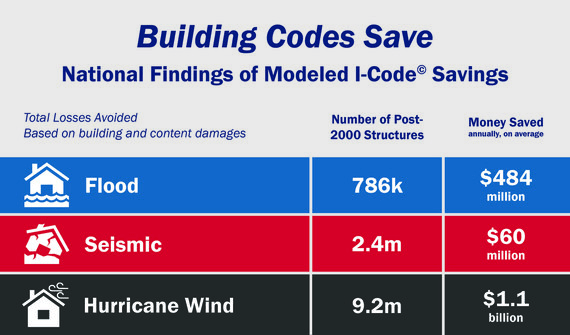
Building Codes Save: A Nationwide Study (FEMA) Using big data, FEMA’s modeling of the 18.1M buildings constructed in the United States since 2000 has found that the nation has benefited to the tune of $1.6 billion in savings each year. These savings represent the cumulative losses avoided from property damage associated with using the International Codes or similar building codes during floods, hurricane, and earthquakes. FEMA projects that, by the year 2040, the nation will save around $3.2 billion in savings per year. This adds up to almost $133 billion in total losses avoided from 2000 to 2040.
Articles
All-Hazards:
After Camp Fire, Paradise, CA, Works on Long-Term Recovery (EM /Gov Tech)
Rule of Law During Pandemics (Peacekeeping and Stability Operations Institute)
Building a Data-Driven Culture in Emergency Management (Dom Prep)
A Provocative Idea for Naming Atlantic Hurricanes That Just Might Work (Forbes)
The Alaska Tsunami That Can’t Be Stopped (The Atlantic)
Flood Sensors Drive Predictive City Management in North Carolina (GCN)
Report: The Disaster Relief Fund: Overview and Issues (CRS)
Resilience:
Systems Thinking Helps Build Resilience in Post-COVID Food Supply Chains(FoodSafety)
Equitable Retreat: The Need for Fairness in Relocating Coastal Communities (Yale Environment)
Public Health / Biosurveillance:
States That Imposed Few Restrictions Now Have the Worst Outbreaks (NY Times)
State of the Nation: A 50-State COVID-19 Survey Report #23: Depression Among Young Adults (HSDL)
Questions Persist over Face Mask Efficacy (HS Newswire)
Some Places Were Short on Nurses Before the Virus. The Pandemic is Making it Much Worse. (Washington Post)
Mauritania Rift Valley Fever Outbreak Update and Chapare Virus in Bolivia 2019: New Evidence Shows Human-to-human Transmission (Outbreak News Today)
Risk Perception Studies Could Improve Pandemic Response (Governing)
Frequent, Rapid Testing Could Turn National COVID-19 Tide within Weeks (Harvard)
Critical Infrastructure & Cyber:
‘Catastrophic Problem’ Looms In 110-Year-Old Hudson River Rail Tunnel If Fixes Aren’t Made (NBC NY)
ACI World Calls for Airport Recovery Plans to Include Climate Change Efforts (International Airport Review)
Innovations & Interconnections:
The Growth Equation of Cities (Nature)
National Consortium on Preventing Law Enforcement Suicide Final Report (IACP) and Disasters Leave a Rise in Suicides in Their Wake: Study (US News) and The Human Costs Of The Pandemic: Is It Time To Prioritize Well-Being? (Brookings)
Articles and resources as of 11/17
Have a Safe and Healthy Holidays!!
As the holidays approach, many across the country are beginning to plan for holiday celebrations and small gatherings. To help minimize risk and prevent the spread of COVID-19, CDC has released considerations for Holiday Celebrations and Small Gatherings. The considerations were updated to reflect small and informal gatherings of family and friends from across multiple households that often occur during the holiday season. The Thanksgiving tip sheet is a resource to help people take steps to make their Thanksgivings safer. These considerations complement other resources to help minimize risk and keep family, friends, and communities safer.
CDC and the CDC Foundation have also provided resources to address stress and coping, and for parents and caregivers to help protect children and young people’s social, emotional, and mental health.
Finally, if you or loved ones are traveling, please check the state you are going to for any updates to that state’s COVID restrictions.
Training & Events
“Mitigation Misery – Practical Tools for Floodplain Managers” (NHMA) The Natural Hazard Mitigation Association and FEMA Region 6 is holding a brownbag to discuss flood mitigation with Edward Thomas Esq.–Fellow of the American Bar Association (ABA) Foundation, member of the ABA Disaster Response and Preparedness Committee and Vice-Chair of the ABA State and Local Government Law Section’s Resilience Task Force. During his career in HUD and FEMA, Ed worked closely with individuals, companies, non-profit organizations local communities developing safe and affordable housing, and results oriented Floodplain Management and Hazard Mitigation. He worked closely with disaster survivors on about two hundred disasters and emergencies, serving as the President’s representative, the Federal Coordinating Officer (FCO), dozens of times.
- Tuesday, November 17, 2020, 1 – 2pm ET
COVID-19 Vaccine Update: Development, Approval, Allocation and Distribution in the U.S.—(National Academy of Medicine) The fifteenth COVID-19 Conversations webinar, scheduled for November 18, 2020 at 5pm ET, will discuss the path to a COVID-19 vaccine, including steps forward in development, approval, allocation and distribution in the U.S. The webinar will begin with an introduction from the session’s moderator, Margaret (Peggy) Hamburg, former FDA commissioner, and then feature a conversation with a panel of experts, including: Larry Corey, President and Director Emeritus, Fred Hutch; James Hildreth, President & CEO, Meharry Medical College; Marion Gruber, Director, Office of Vaccines Research & Review, Center for Biologics Evaluation and Research, U.S. Food and Drug Administration; and Jay Butler, Deputy Director for Infectious Diseases, Centers for Disease Control and Prevention. The panel discussion will be followed by a Q&A session with the webinar audience.
- Wednesday, November 18, 2020 5-6:30pm ET (requires pre-registration)
A Nation Unprepared: Incomplete Implementation of the National Blueprint for Biodefense— Virtual Meeting of the Bipartisan Commission on Biodefense — The Commission will assess the national response to COVID-19 as those activities relate to the recommendations of their 2015 Blueprint, and better understand federal efforts to enhance national biodefense.
- Monday, November 30, 2020 10:00am – 3:30pm ET
FEMA releases draft ‘Building Private-Public Partnerships Guide’ for public comment (IAEM)FEMA is seeking content input from community partners on the “Building Private-Public Partnerships Guide” draft document. The agency will host a series of 60-minute engagement webinars to discuss the Guide and answer stakeholders’ questions. The purpose of the review is to provide an opportunity for the public to provide substantive content recommendations and refinement of the draft. The webinars will be open to the whole community and advance registration is required. To register, click on the preferred webinar session below.
Webinar: Urban Flood Hazards: Challenges and Opportunities (NHMA) The Georgia Association of Floodplain Management (GAFM) No Adverse Impact (NAI) Committee, in conjunction with the ASFPM NAI Committee, and hosted by Michael Baker, International Inc.
- Wednesday, December 2, 2020 @ 12:00 p.m. – 1:00 p.m. EDT
Webinar: Federal Alliance for Safe Homes 2020 Review – 2021 Outlook (FLASH) Hear from FLASH President and CEO Leslie Chapman-Henderson and Executive Vice President Eric Vaughn about recent events and milestones in the disaster safety and resilience movement and how current and future partners can drive meaningful change through new collaboration opportunities. FLASH had planned to offer the 2020 National Disaster Resilience Conference (NDRC) in a traditional, in-person format. However, we have postponed it until December 2021 due to current conditions.
- Thursday, December 3 at 2:00 p.m
Webinar: 5G is Here! How Will This Impact Emergency Communications? (CISA) The rapid rate of technology advancement continues to outpace the public safety community acquisition cycle. The arrival of 5G – the fifth-generation technology standard for cellular networks – is one example. It is envisioned that 5G will have the potential to enhance operations, support information-sharing, improve efficiency and response time, augment security, and increase capacity for more connected devices. This webinar will identify actions organizations can take to prepare for the implementation of new solutions like 5G.
- Wednesday, December 8 at 1:00 p.m.
Resources
New Report Details Approach for Rapid Development of Innovative Diagnostic Tests for COVID-19 and Other Infectious Diseases In a new special focus report released today, Diagnostics for Biodefense – Flying Blind with No Plan to Land, the Bipartisan Commission on Biodefense provides an approach that would ensure the United States can rapidly develop innovative point-of-care and point-of-need diagnostic tests for COVID-19 and other novel, emerging, and reemerging infectious diseases when they occur. The report contains recommendations for both the Executive and Legislative Branches of the government. In accordance with Recommendation 30 of the Commission’s baseline 2015 A National Blueprint for Biodefense, the report calls for the development of a national plan for testing, recommending that Congress amend the CARES Act of 2020 to direct the Secretary of Health and Human Services, in coordination with the Secretary of Defense, to establish a new task force to develop innovative rapid diagnostic solutions and scale up testing dramatically across the Nation, eliminate supply chain disruptions, and pursue advances in diagnostic technology.
Congressional Research Service (CRS) released the following COVID-19-related reports:
- Homelessness and COVID-19 (CRS) People experiencing homelessness are at increased risk of contracting and spreading Coronavirus Disease 2019 (COVID-19). Since the onset of the COVID-19 pandemic, there have also been concerns that the number of people experiencing homelessness could increase. Unemployment rates grew as some industries, including restaurants, retail, and hospitality, essentially shut down for varying periods of time. The economic effects of the COVID-19 pandemic have been greater for low-income workers, renters, and minority households.
- Vaccine Safety in the United States: Overview and Considerations for COVID-19 Vaccines (CRS) In light of reported concerns from the public surrounding the safety and effectiveness of COVID-19 vaccines developed on an expedited timeline, FDA officials have sought to clarify that any vaccine candidate “will be reviewed according to the established legal and regulatory standards for medical products.” If made available within the next several months, available safety and effectiveness data would be based on months of data collection rather than on years of data collection typically used in vaccine development. In addition, efforts are underway with regard to (1) clinical guidance and prioritization of individuals to receive the likely limited initial supply of COVID-19 vaccines; (2) strengthening safety monitoring systems to collect ongoing safety surveillance data on vaccines administered to the population; and (3) preparing for safety controls in vaccine distribution and patient administration, in addition to other activities.
- COVID-19: Potential Implications for International Security Environment—Overview of Issues and Further Reading for Congress (CRS) Observers who argue the COVID-19 pandemic could be world-changing for the international security environment and the US role in the world have focused on several areas of potential change, including the following, which are listed here separately but overlap in some cases and can interact with one another. Issues for Congress may include whether and how the COVID-19 pandemic could change the international security environment, whether the Trump Administration’s actions for responding to such change are appropriate and sufficient, and what implications such change could have for the role of Congress in setting and overseeing the execution of US foreign and defense policy.
Guiding Principles for Emergency Management on Cyber Security (NEMA) The cascading impacts of a cybersecurity incident during the COVID-19 response have reinforced the need to ensure state government enterprises are secure and resilient in the face of cyber threats. To that end NEMA, the Department of Homeland Security Cybersecurity and Infrastructure Security Agency (DHS CISA), and Auburn University’s McCrary Institute partnered to develop a document that outlines guiding principles for emergency management executives around cybersecurity. The Guiding Principles for Emergency Management on Cyber Security addresses the three essential elements to an effective cybersecurity posture: leadership, culture, and strategy.
“Attacks Tracker” of Jihadist Motivated Terrorist Attacks (GWU) The George Washington University Program on Extremism (PoE) released a tracker monitoring jihadist motivated terrorist attacks in Europe and North America. The tracker is based on a database maintained by the PoE and includes data since 2014. Initial findings include that 75 percent of attacks were perpetrated in Europe, and 71 percent of attackers were known to authorities prior to the attack taking place. The year with the most terrorist attacks recorded was 2017, but 2020 has had more than double the number of incidents as 2019.
Articles
All-Hazards:
First Responders: Cloud-Based Framework Improves Efficiency in Disaster-Area Management (HS Newswire)
Climate Change Intensifies Tsunami Threat in Alaska (Hi Country News)
USFA Logs Lowest Annual Count in 2019 Firefighter Fatalities Report (FEMA / USFA)
Study Projects More Rainfall in Florida During Flooding Season (Phys.org)
Obstacles to Timely Emergency Messaging For Acute Incidents (Journal of EM)
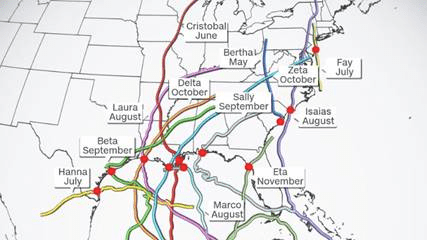
As the Oceans Warm, Hurricanes Stay Stronger Longer (Sci. American)
Resilience:
Climate Change Will Make Parts of the U.S. Uninhabitable. Americans Are Still Moving There (ProPublica)
The Next COVID Dilemma: How to Make Buildings Breathe Better (WIRED)
Preserving Cultural and Historic Treasures in Changing Climate May Mean Transforming Them (The Conversation)
Public Health / Biosurveillance:
NIH to Study How Much (More) Americans Are Drinking Alcohol During Pandemic (Pew: Rt. Fifty)
Epidemics: Odds and Evens: A Strategy for Safely Exiting Lockdown 2 (HS Newswire)
Coronavirus FAQ: Could COVID-19 Ever Be Considered A Preexisting Condition? (NPR)
Nurses in Every New Haven School as Frontline Against COVID (EM / Gov Tech)
Epidemic: Shielding the Vulnerable Using a Risk Calculator – Here’s Why It Won’t Be Enough (HS Newswire)
Invasive Weed Found in Michigan Grows Six Inches a Day (Pew: Rt. Fifty)
Critical Infrastructure & Cyber:
Food Security: Nuclear War Could Take a Big Bite Out of the World’s Seafood (HS Newsire)
National Guard to Help Vermont Health Network After Cyberattack (Infosecurity)
Innovations & Interconnections:
Epidemic: Putting Games to Work in the Battle Against COVID-19 (HS Newsire) and Storytelling—Plots of Resilience, Learning, and Discovery in Emergency Management (Journal of EM)
Disaster ‘Prepping’ Was Once An American Pastime. Today, It’s Mainstream Again. (Nat Geo)
More Economic Worries Lead to Less Caution about COVID-19 (HS Newsire)
Article: This game challenges you to stop a pandemic, and it can break your spirit
This game challenges you to stop a pandemic, and it can break your spirit https://flip.it/sAf559
Nov 10 updates, articles and announcements
Training & Events
Webinar: Building Community Resilience through Innovation and Partnerships (Council of State Governments) Historic amounts of grant funding will flow into states in 2021 to use for pre-disaster mitigation and large infrastructure projects from the Building Resilient Infrastructure and Communities (BRIC) Program through the Federal Emergency Management Agency (FEMA). The new BRIC program allows states and local communities to shift from reactive disaster spending and instead take forward-leaning and innovative approaches to building resilience, including public-private partnerships and nature-based solutions. Learn how this unprecedented opportunity can be leveraged to build climate and disaster resilience, reinforce equity and encourage stronger economies. Note: No cost for CSG-associate members; $250 for non-members. If you have questions about registration, please contact CSG at registration@csg.org.
- Friday, Nov 13, 2020 02:00 PM
FEMA National Advisory Council virtual meetings (FEMA) — on emergency management issues, pursuant to Homeland Security Department; Federal Emergency Management Agency (F.R. Page 68355)., Agenda includes: present recommendations to and receive feedback from leadership; and discuss strategic priorities with FEMA leadership and topical experts. Note: RSVP required by 5 p.m. November 13. Contact: Jasper Cooke at 202-646-2700 FEMA-NAC@fema.dhs.gov to register and receive dial-in information.
- November 17-18, starting @ 12:30pm ET.
Maximizing FEMA COVID-19 Funding and Reimbursements — The U.S. Conference of Mayors’ webinar “Maximizing FEMA Funding and Reimbursements Eight Months In,” is now available at no cost on-demand. Eight months into the pandemic, many cities are preparing and submitting reimbursement requests to the Federal Emergency Management Agency (FEMA). This webinar provides useful information to assist cities in using available federal aid to respond to the impact of COVID-19 on cities and their residents
Resources
State and Local Mitigation Planning Policy Update: Summary of Feedback Report (FEMA) The National Mitigation Planning Program is updating the state and local mitigation planning policies. These policies guide the review and approval of state and local hazard mitigation plans. The policies are also known as the Mitigation Plan Review Guides, and are FEMA’s official interpretation of the hazard mitigation planning requirements in the Code of Federal Regulations (44 CFR Part 201). This effort included a broad call for ideas and feedback. Representatives from state, local, and territorial communities and the public could participate in one of three listening sessions held in mid-July as well as submit comments by email. Over 550 federal, state, local, academic, and non-governmental partners shared nearly 440 comments The National Mitigation Planning Program has summarized these comments in a report available online.
U.S. Geological Survey (USGS) Creates Mobile Flood Tool (HS Newswire) – The U.S. Geological Survey announced Friday the completion of a new mobile tool that provides real-time information on water levels, weather and flood forecasts all in one place on a computer, smartphone or other mobile device. The new access anywhere interactive map helps minimize loss of life and property. the USGS National Water Dashboard will help inform forecasting, response and recovery efforts for agencies such as the National Weather Service, the Federal Emergency Management Agency, the U.S. Army Corps of Engineers, and other federal, state and local agencies.
November is Infrastructure Security Month (DHS / CISA) Designed to focus on the vital role critical infrastructure – cyber and physical – plays in keeping the nation and our communities safe, secure and prosperous. The Cybersecurity and Infrastructure Security Agency (CISA) is promoting two sub-themes for Infrastructure Security Month 2020: In a Time of Transformation: Security and Response during a Global Pandemic and The Future of Securing Critical Infrastructure.
Securing Soft Targets and Crowded Places (DHS / CISA) CISA’s collection of resources covering the many facets of this topic. Securing Soft Targets and Crowded Places offers planning and response guidance on active shooters, vehicle ramming, chemical attacks and fire as a weapon.
Special Report: Public Health in State and Local Government (Pew: Rt. Fifty) Covid-19 exposed gaps in data use for state governments but it also revealed innovative practices that can be applied in the future. This Special Report looks at the latest trends in public health as agencies combat coronavirus and other problems.
Federal Register Updates (NEMA) The Federal Register was active in recent days, with a selection of relevant updates below:
- FEMA: Comment Request on Information Collection for National Disaster Preparedness Survey
- FEMA: Comment Request on Information Collection for Emergency Notification System (ENS)
- CDC: Statement of Organizations, Functions, and Delegations of Authority
- FCC: Correction to Date Regarding Wireless 911 Location Accuracy Requirements
CISA Graphic Novel: Real Fake (CISA) Real Fake, the first graphic novel in CISA’s Resilience Series, communicates the dangers and risks associated with dis- and misinformation through fictional stories that are inspired by real-world events. Readers follow protagonists Rachel and Andre as they discover that a command center in Russia is using a network of troll farms to spread false narratives about elections to American voters. With the elections coming up, Rachel and Andre follow the trail of synthetic media and stop the cyber assailants from causing chaos, confusion, and division.
Articles
All-Hazards:
Alerts: Action-Led Alerts Effective in Natural Disasters (HS Newswire)
Wildfires Threaten West Coast’s Seismic Network (UN Prevention Web)
Volunteers Needed to Help With Hurricane Zeta Recovery (WLOX)
Can AI and Connected Tech Foster Better Disaster Decision-Making? (GCN)
What Creates Community Disaster Response Chaos (Nat. Interest)
Resilience:
How Better Building Codes Can Mitigate Wildfires’ Devastation (UN Prevention Web)
How New Modes of Storytelling Engage Australians in Disaster Preparedness and Long-Term Resilience (AUS)
Firebreak: Wildfire Resilience Strategies for Real Estate (ULI – Knowledge Finder)
Public Health / Biosurveillance:
Moving Millions of County Dollars to Prepare for COVID (EM/GovTech)
Escaping the ‘Era of Pandemics’: Reducing Risks of Worse Crises to Come (HS Newswire)
Local Health Departments Find New Ways to Provide Flu Vaccines (Pew: Rt. Fifty)
Critical Infrastructure & Cyber:
Creating a National Network of Cybersecurity Institutes (HS Newswire)
New Cyber Technologies Protect Utility Energy Delivery Systems (HS Newswire)
Safeguarding the Nation’s Supercomputers (HS Newswire)
A Big 2020 Election Hack Never Came. Here’s Why. (Pew: Rt. Fifty)
Apple Will Require Apps to Add Privacy “Nutrition Labels” Staring December 8th(The Verge)
Innovations & Interconnections:
The World’s Courtrooms Could Unleash the Next Wave of Green Investing (Bloomberg Green)
Poor U.S. Pandemic Response Will Reverberate in Health Care Politics for Years, Health Scholars Warn (HS Newswire)
ESG Data Explosion, Investors Demand Diversity, Policymakers Fight Climate Change (Financial Times)
The Denialist Playbook: On Vaccines, Evolution and More, Rejection of Science Has Followed a Familiar Pattern (Sci American)
Articles, Resources, Events 11/4/2020
Training & Events
- Thursday, November 05, 2 pm ET
Webinar: Ohio’s Secretary of State & More Discuss Cybersecurity Infrastructure (Pew Rt. Fifty / Nextgov) What can agencies do during this uniquely trying time to shore up cyber vulnerabilities and prevent threats? This webcast will explore what it would take to put the ransomware protections and cybersecurity infrastructure in place in order to have a secure, remote workforce. We’ll dive into newly released ransomware guidance across federal agencies and discuss what the guidance may hold for the future.
- Tuesday, November 10, 2020, 3:00 – 4:00 PM EDT
Resources
The Select Subcommittee on the Coronavirus Crisis, House of Representatives, Interim Staff Report on key findings during its first six months of the federal response to COVID-19. As a reminder, EM CoP shares these resources to share important perspectives, in this case, from our client. The EM CoP does not endorse any of the findings or messages, but shares this information for those whom it may be useful. See EM CoP Resources folder / COVID19 FY21_ALL_STAFF-#139890
Master Question List for COVID-19 [caused by SARS-CoV-2] (DHS S&T) The Department of Homeland Security (DHS) Science and Technology Directorate (S&T) developed the following “master question list” that quickly summarizes what is known, what additional information is needed, and who may be working to address such fundamental questions as, “What is the infectious dose?” and “How long does the virus persist in the environment?” The Master Question List (MQL) is intended to quickly present the current state of available information to government decision makers in the operational response to COVID-19 and allow structured and scientifically guided discussions across the federal government without burdening them with the need to review scientific reports, and to prevent duplication of efforts by highlighting and coordinating research.
Critical Drug Shortages Further Complicate Pandemic Response (CIDRAP) The report from the University of Minnesota’s Center for Infectious Disease Research and Policy (CIDRAP) at found that 29 out of 40, or approximately 73 percent, of drug treatments for COVID-19 are experiencing shortages. On top of spikes in treatment in hotspots, multiple factors contribute to shortages such as manufacturing halts, supply chain disruptions and international export restrictions. CIDRAP discusses the overarching consequences of drug shortages, the need for better transparency, and reliance on foreign sources and how a series of events (intentional or natural) could put us at even higher risk. This is part six in a series on COVID-19. See the CIDRAP website for the other reports in the series.
2020 Wildfire Risk Report — CoreLogic released the 2020 Wildfire Risk report, which takes a look at some of the new wildfire challenges faced, new ways to examine risk, losses from the year to date and methods of reducing those losses. According to the report, up to the end of September this year over 7 million acres have burned in the United States. Responding to wildfires in 2020 has been extremely challenging not only due to new challenges from COVID-19 but also because of the number and size of fire. Recovering from them may also be more challenging. The report also shares the 10 cities Core Logic found as having the highest rate of potential risk of loss from wildfire, including Denver; Austin and San Antonio, Texas; Los Angeles, San Diego, Thousand Oaks, Truckee, Riverside, and Sacramento, Calif.
State Public Health Authorities and COVID-19 Legal Challenges (ASTHO blog) The Association of State and Territorial Health Officials (ASTHO) drafted an explainer of several legal challenges currently faced in states around the emergency powers invoked by governors and health officials to order physical distancing measures. Common issues faced include: challenges to the underlying legal authority of state executives to respond to public health crises; claims that “public health” falls outside state emergency powers; COVID-19 not qualifying as an emergency per state law; and judicial deference to landmark legal cases including Jacobson v. Massachusetts.
EESI Policy Recommendations for Coastal Community Resilience— The Environmental and Energy Study Institute published a report detailing policy recommendations for improving coastal community resilience in the face of natural hazards and climate change. The report is divided into six sections: community at the forefront; land use and development; cultural heritage; climate adaptation and resilience data; disaster preparedness; and financing adaptation and resilience. Including 30 specific coastal resilience policy recommendations, this document may be useful when developing BRIC applications. View their coastal resilience briefing series and the full report here.
Confronting Urgent Threats to Human Health & Society: COVID-19 and Climate Change (NAM Annual Meeting) The recordings of the entire 2020 National Academy of Medicine (NAM) Annual Meeting are available above.
Articles
All-Hazards:
Shift Needed to Impact-Based Weather Forecasting (HS Today) and NOAA Partners with Google to Boost Weather Forecasts with AI (Pew: Rt. Fifty)
Resilience:
How Does the Environment Impact COVID-19? (DHS S&T)
Land Managers Can’t Burn the West Fast Enough (Pew: Rt. Fifty)
How the U.S. Could Be Smarter About Insuring Against Extreme Weather-Related Disasters (MarketWatch)
Public Health / Biosurveillance:
State Department: Reducing Revisionist State Biological and Chemical Weapons Threats (Global Biodefense)
Who Will Get the COVID Vaccine First? A New Tool Aims to Help States Decide (Pew: Rt. Fifty)
Increased and Imminent Cyber Threat to Healthcare and Public Health (DHS/CISA)
A Flu Shot Might Reduce Coronavirus Infections, Early Research Suggests (Sci. American)
‘Storm Tracker’ Maps Shows How Hurricanes Spread Invasive Species (Smithsonian)
How Indigenous Communities in Canada Organized an Exemplary COVID Public Health Response (Sci. American)
Critical Infrastructure & Cyber:
Federal agencies warn hackers targeting U.S. hospitals with ransomware attacks (The Hill) CISA, FBI, and HHS have credible information of an increased and imminent cybercrime threat to U.S. hospitals and healthcare providers,” the agencies wrote in a joint alert. These cyber-attacks have targeted healthcare networks in Vermont and New York, among other states.
Innovations & Interconnections:
Connecting People and Places: Exploring New Measures of Travel Behavior (Brookings)
What Should Crisis Leadership Look Like? (New Yorker)

