This article argues that rapid, equitable recovery depends on relational infrastructure built long before crisis—and that crisis opens up the chance to make bigger changes than were possible during “normal” times.
Category: UDC Disaster Mgt course / Homeland Security Masters program
New Global Multidimensional Poverty Index Report Reveals Nearly 80% Of World’s Poor Live In Regions Exposed To Climate Hazards – Eurasia Review
Helene: Cash flow in small towns is problem FEMA cannot fix
https://www.aol.com/helene-cash-flow-small-towns-130100566.html
Like many towns in western North Carolina, Beech Mountain was heavily damaged by Hurricane Helene in the fall of 2024.
The town suffered about $30 million in damage, much of it to vital public facilities such as roads, water and sewer, and drainage.
Assessing Risk thru Hi Rez
This NASA Satellite Sent The First Radar Images Of Earth’s Surface And The Results Are Very Clear https://flip.it/HKcbJK
In Arizona, a fight against valley fever collides with Trump’s policies | Grist
https://grist.org/health/valley-fever-arizona-fungus-climate-change/
Extinction by 1000 “paper cuts”.
Capitalism-caused climate change is amplifying these ‘Last Of Us’ scenarios (disese- borne ticks, poisonous plants, incubation of bacteria, micro-organisms, fungus, etc., )
Shutdown 2025: perspective from “alt-FEMA”
Federal Shutdown
What does this mean for FEMA?
| Alt-FEMA NewsletterOct 2 |
Well, it happened.
The government has shut down. We won’t go into detail about the who and why, because we are sure you already know these answers (Emergency managers and disaster responders are notorious for staying up to date on current events—it’s in our blood). Now is the time to break down how the shutdown will affect not only interagency capacity and the impacts for employees, but also the impacts for Americans who rely on FEMA to be there before, during, and after disaster strikes.
Shutdown Notice
FEMA employees received emails announcing the impending government shutdown. They were, in all honesty, very lackluster in explaining the potential impacts. The core notice was this:
Shutdown Notice
FEMA emloyees received emails announcing the impending Government shutdown. They were, in all honesty, very lackluster in explaining the potential impacts. The core notce was this:
- Exempt employees will continue working with normal pay
- Excepted employees will continue working without pay until funding is restored
- Non-exempt employees will be furloughed and may not perform any work
If this is your first government shutdown as a federal employee, you may not know that in “the before times”—prior to the current administration—employees would receive several in-depth and explanatory emails about the potential lapse in funding and how specific roles and operations would be affected. These editors have been informed by FEMA staff that this did not happen this time around, and that it appeared the agency—specifically leadership—was wholly unprepared for this to occur. Some staff reported not even knowing, on the day of, how their roles would be affected or if they would be furloughed.
Since they failed to explain the impacts, we decided to take a crack at it.
Let’s break this down a bit more and explain who and what roles are impacted, as well as how this may affect disaster work, grants, and other aspects pertaining to the disaster response cycle.
Examples of Exempt employees: Disaster-funded positions under the Disaster Releif Fund include
- Public Assistance and Individual Assistance staff working on declared disasters
- Hazard Mitigation (Hazard Mitigation Grants Program, Hazard Mitigation Assistance, Building Resilient Infrastructure and Communities) Personnel tied to active disaster operations
- Regional Recovery Division staff funded by the DRF
In short: If your pay comes from disaster operations funding (DRF), you are likely exempt.
Examples of Excepted FEMA Roles:
These employees are not exempt, but their work is “necessary for the protection of life and property” under OMB Circular A-11, Section 124. They must continue reporting to duty, even without immediate pay.
- NRCC / RRCC staff supporting ongoing incidents
- Watch officers in the National Watch Center / Regional Watch Centers
- Continuity of Operations (COOP) personnel
- Field Leadership & Response Coordinators
- Essential administrative support needed for life-safety mission execution (limited HR, travel, finance)
In short: These are people who must work to protect lives or property, even if funding lapses — they’ll receive back pay once appropriations resume.
Examples of Non-Exempt Employees (Furloughed — no work allowed):
These employees are funded by annual appropriations (e.g., salaries paid from base budgets, not DRF or WCF) and whose duties are not deemed essential under OMB guidance. They must be furloughed and cannot perform any work — including checking email or Teams — during the lapse.
- HQ administrative staff not tied to life-safety missions
- Policy analysts, planners, and training personnel not supporting DRF or COOP missions
- Non-disaster-funded Mission Support staff
- Grants management staff not tied to open disaster operations (e.g., preparedness grants)
- Program analysts or coordinators working on non-emergency policy development
In short: If you’re funded by annual appropriations and your work isn’t directly life-safety or DRF-related, you’d be furloughed.

Agency Operations Impacted:
These activities are non-essential and non-funded during a lapse.
- Public Engagement & Non-Mission Communications
- Public Affairs will limit output to disaster communications only.
- Website updates, non-disaster social media, and outreach campaigns will be paused.
- Community engagement events, unless related to life-safety, will be canceled.
- External visibility will be reduced, and outreach programs will be suspended.Response from the Current Administration:
At Least 170 US Hospitals Face Major Flood Risk. Experts Say Trump Is Making It Worse. – KFF Health News
New USGS Map Offers an Interactive Look at the Rocks Beneath Our Feet – Eos
https://eos.org/articles/new-usgs-map-offers-an-interactive-look-at-the-rocks-beneath-our-feet
Yet another GIS-based dataset that can be helpful in identifying risks and mitigating them
I love a good map, like I love a) passenger trains and b) city centers.
Data Brokers Have a File on You. Here’s How to See What’s Inside https://flip.it/co7ckY
Not EM.
Privacy
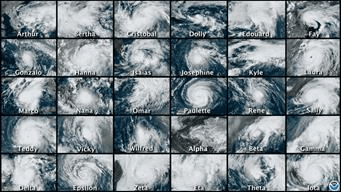
New study links hurricane size to unexpected factor: ‘Like popcorn heated on an uneven pan’
https://www.thecooldown.com/outdoors/rapidly-expanding-hurricanes-ocean-temperature-climate/
‘”A larger storm has a larger footprint of damaging winds, generates higher storm surge and over a larger area, and produces more rainfall — all greater risks to society,” … “Better predictions of storm size at landfall translate to better predictions of the hazards that pose risks to life and property.”
 From Brassville to... (working title)