The Time to Restructure Our Disaster Recovery System Is Now https://flip.it/Fp_hIZ
Article: Natural hazards threaten 57% of US structures
Natural hazards threaten 57% of US structures https://flip.it/nvET_1
Article: The wildfire one-two: First the burn, then the landslides
The wildfire one-two: First the burn, then the landslides https://flip.it/eVcsNA
Video: Millions take part in Mexico City earthquake drill
Millions take part in Mexico City earthquake drill https://flip.it/kNU8v_
Article: A Disaster Expert Says These 6 Steps Could Help The World Recover From The Pandemic
A Disaster Expert Says These 6 Steps Could Help The World Recover From The Pandemic https://flip.it/shQM1w
Article: Homeowners Say Weather Risks Are Driving up Insurance Costs
Homeowners Say Weather Risks Are Driving up Insurance Costs https://flip.it/QErOiN
Article: Water: Amazing new map shows the path of every raindrop that hits the United States
Water: Amazing new map shows the path of every raindrop that hits the United States https://flip.it/jY30cD
Article: The enchanting world of beavers in King County — and how they might benefit a warming planet
The enchanting world of beavers in King County — and how they might benefit a warming planet https://flip.it/y7fbFg
Events/Resources/Articles March 1, 2021
Training & Events
Examining and addressing COVID-19 racial disparities in Detroit (Brookings) COVID-19 has disproportionately impacted Black communities. In fact, Black Americans are 2.3 times more likely than white Americans to die from the virus. Black residents of Detroit, Mich., have been hit especially hard. In Detroit, Black people represent 76% of known COVID-19 diagnoses by race and 87% of deaths. In a forthcoming paper entitled “Examining and addressing COVID-19 racial disparities in Detroit,” Brookings researchers address the staggeringly large racial gap in COVID-19 infections in the city.
- Tuesday, March 2, 2021, 1:00 – 2:00 p.m. EST
Prior announcements:
NEMA Webinar Series Presents: Emergency Management Virtual Learning Lab (NEMA) NEMA will host the webinar series which will include two webinars and one social event each week during the month of March. The topics have been chosen by NEMA Associate Member Sponsors and we are deeply gratified to have such experience and expertise to draw from during these remarkable times. These webinars will be held during March from 2:00 to 3:30 pm eastern time.
Flood Resilience in the Year Ahead: Opportunities for the New Congress (Pew Trusts) In recent years, the country has witnessed unprecedented hurricanes and inland flooding. As another spring flooding season approaches policy opportunities exist for the new Congress to ensure our communities and the roads, hospitals, schools, and other critical lifeline infrastructure they depend on can withstand future floods. The Pew Charitable Trusts and The BuildStrong Coalition for a discussion on ways the 117th Congress can better support state and local efforts to address growing flood risk posed by the increasing severity and frequency of disasters and climate impacts.
· Friday, March 5, 11am- Noon ET
Resources
Mapping Climate Risks by County and Community (American Communities Project) The American Communities Project (ACP) has leveraged data from Four Twenty Seven, a physical climate risk data firm and affiliate of Moody’s, to understand how the risks manifest by ACP type — and where populations and infrastructure may be especially vulnerable. Four Twenty Seven analyzes several physical risks to the U.S. landscape, including sea level rise; hurricanes; extreme rainfall; water stress; and heat stress, characterized by higher temperatures. Many of Four Twenty Seven’s projections through 2040 show the risks are regional, as illustrated in maps below. The ACP has further parse the degree to which high risks differ by 15 different ACP types.
Strategies for Emergency Evacuation and Sheltering during the COVID-19 Pandemic (Nat. Academies of Science) The COVID-19 pandemic has changed the nature of emergency operations in response to natural hazards. In the context of the pandemic, fundamental shifts in preparedness planning are needed to ensure health, safety, and smooth operations during emergencies. This guidance, produced by the Societal Experts Action Network (SEAN) of the National Academies, explores how research on evacuation behavior, social responses to disaster, and risk communication can be applied to emergency management in the era of COVID-19. SEAN identifies strategies for updating evacuation plans, sheltering operations, and risk communication practices in light of the COVID-19 pandemic. Click on the links below to learn more.
Ready Responder Resources Ensure Peace Of Mind When Disaster Strikes (FEMA/Fire Admin) Ready.gov’s webpage Ready Responder offers resources and guides for both firefighters and law enforcement to help them be prepared when disasters occur. The Ready Responder Toolkit is designed to provide emergency response agencies with a series of planning tools to help prepare their personnel and their families for emergencies.
“Smart grid” interoperability standards from NIST may benefit future emergency services (FEMA) Just as southern states are recovering from the power blackouts caused by winter storms, the National Institute of Standards and Technology (NIST) has released Version 4.0 of its Smart Grid Framework, a roadmap to strengthen the resilience of the nation’s power infrastructure through use of interoperability standards. The Emergency Services Sector may benefit from the capabilities generated by “smart grid” interoperability.
The Cost of Climate: America’s Growing Flood Risk” (First St. Foundation) New research from First Street Foundation analyzes the economic impact of underestimated flood risk to properties throughout the United States. Current understandings of expected flood risk and its potential damage continue to underestimate the full extent of flood risk in many parts of the country. This is problematic as these understandings of flood risk are used to price insurance premiums in the market by estimating property-level average annual loss (AAL).
DHS Announces Funding Opportunity For $1.87 Billion In Preparedness Grants (FEMA) The Department of Homeland Security (DHS) FY2021 grant funding focuses on terror attacks and major disasters: As the threats we face evolve, so too must the grant programs intended to prepare communities for those threats. To that end, DHS has identified five critical priority areas for attention in the FY2021 grant cycle: cybersecurity, soft targets and crowded places, intelligence and information sharing, domestic violent extremism, and emerging threats. The allocations for FY2021 include both competitive and non-competitive awards.
Non-competitive grants include:
• State Homeland Security Program (SHSP).
• Urban Area Security Initiative (UASI).
• Emergency Management Performance Grant (EMPG) Program.
• Intercity Passenger Rail (IPR) Program – Amtrak.
Competitive grants include:
• Operation Stonegarden.
• Tribal Homeland Security Grant Program.
• Nonprofit Security Grant Program.
• Port Security Grant Program.
• Transit Security Grant Program.
• Intercity Bus Security Grant Program.
Articles
All-Hazards:
· Many Rural Texas Counties Currently Left Out Of Federal Disaster Aid Eligibility For Winter Storm (Texas Tribune)
· Most of Texas Deep Freeze $90 Billion in Losses Avoidable, Modeler Says (Ins Journal)
· Post-Wildfire Landslides Becoming More Frequent In Southern California (Phys.org)
· The Disasters Keep Coming But Not The Funds For FEMA (The Hill)
· Natural Hazards Have Unnatural Impacts—What More Can Science Do? (AGU Eos)
· Juneau Officials Recommend Residential Evacuations, Warning Of Dangerous ‘Historic Avalanches’ (Anchorage Daily News)
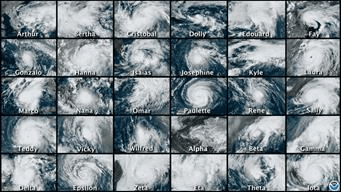
· We’re Less Than 100 Days From the 2021 Atlantic Hurricane Season – Here Are This Year’s Names (Weather.com)

Resilience:
· Climate Threats Could Mean Big Jumps in Insurance Costs This Year (NYTimes) and Flood Risk Is Growing For US Homeowners Due To Climate Change. Current Insurance Rates Greatly Underestimate The Threat, A New Report Finds (CNN)
· Wind Power Didn’t Cause The Texas Blackouts. But It Wasn’t Just Fossil Fuels, Either (LA Times)
Public Health / Biosurveillance:
· Unscathed: These Alaska villages are reaching herd immunity — without a single case of COVID-19 (AK NPR)
Critical Infrastructure & Cyber:
· Feds Up Share of FEMA Grants That Must Be Spent on Cybersecurity (Rt. Fifty)
· Biden Orders Review to Bolster Supply Chain Resiliency (HS Newswire)
· A Looming Crisis for Local U.S. Water Systems? (HS Newswire)
· What Went Wrong with Texas’ Power Grid? (HS Newswire) and Texas’ Power Grid Was 4 Minutes And 37 Seconds Away From Collapsing. Here’s How It Happened (NPR –Austin TX)
· Public Employees’ Use of Personal Phones, Tablets Puts Local Governments at Risk (Rt. Fifty)
· U.S. Energy Regulator to Examine Climate Change’s Threat to Power Reliability (US News)
Innovations & Interconnections:
· Fleets of Radar Satellites Are Measuring Movements on Earth Like Never Before (Science)
· Science at a crossroads: Where to next? (Pew Trusts / Trend magazine)
Articles, Resources, Events – as of 2/22/21
Earthquake Resilience Technology Webinar and Guidance for Earthquake Awareness Month (FEMA) During the month of February, Central United States Earthquake Consortium (CUSEC) will promote earthquake awareness, including educational resources for increasing resilience of the built environment and facilitating recovery from earthquakes. CUSEC is providing webinars that are intended to educate the public, private sector, first responders, and government. This webinar will discuss new technology of interest to those involved in hazard mitigation and planning, featuring the Rapid Visual Screening (RVS) App used to screen buildings for potential earthquake vulnerabilities. Also relevant to earthquake resilience is a publication released in January 2021 in support of the National Earthquake Hazards Reduction Program (NEHRP), titled Recommended Options for Improving the Built Environment for Post-Earthquake Reoccupancy and Functional Recovery Time. This report is a joint effort by the Federal Emergency Management Agency (FEMA) and the National Institute of Standards and Technology (NIST) to chart a path toward superior earthquake recovery.
- Thursday, February 25 from 2:30 p.m. to 4:30 p.m. EST
FEMA Mapping Issues: Technical Mapping Advisory Council meetings (FEMA) Homeland Security Department; Federal Emergency Management Agency (F.R. Page 9358) holds a meeting by teleconference of the Technical Mapping Advisory Council, March 1-2. Agenda includes: Vote to submit the final report to the FEMA Administrator; Introduce 2021 TMAC tasking, and Vote to appoint a new chair for 2021. Contact: Brian Koper at 202-646-3085 brian.koper@fema.dhs.gov. Note: RSVP required by 5 p.m. February 26 to FEMA-TMAC@fema.dhs.gov
- Monday & Tuesday, March 1-2 | 10am to 4pm ET
NEMA Webinar Series Presents: Emergency Management Virtual Learning Lab (NEMA) NEMA will host the webinar series which will include two webinars and one social event each week during the month of March. The topics have been chosen by NEMA Associate Member Sponsors and we are deeply gratified to have such experience and expertise to draw from during these remarkable times. These webinars will be held during March from 2:00 to 3:30 pm eastern time.
Flood Resilience in the Year Ahead: Opportunities for the New Congress (Pew Trusts) In recent years, the country has witnessed unprecedented hurricanes and inland flooding. As another spring flooding season approaches policy opportunities exist for the new Congress to ensure our communities and the roads, hospitals, schools, and other critical lifeline infrastructure they depend on can withstand future floods. The Pew Charitable Trusts and The BuildStrong Coalition for a discussion on ways the 117th Congress can better support state and local efforts to address growing flood risk posed by the increasing severity and frequency of disasters and climate impacts.
- Friday, March 5, 11am- Noon ET
Resources
Housing Recovery and CDBG-DR: A Review of the Timing and Factors Associated with Housing Activities in HUD’s Community Development Block Grant for Disaster Recovery Program (HUD) This study examines post-disaster housing recovery supported by the Community Development Block Grant Disaster Recovery (CDBG-DR) program, which channels specially appropriated federal funds to state and local grantees in support of a variety of post-disaster recovery activities. The main goals of the study were to estimate how long it typically takes to complete CDBG-DR housing activities, what factors contributed to those completion times, and what could be done to improve them. The researchers estimate these activities are completed, on average, in 3.8 years, and that this time to completion has shortened over the program’s lifetime. The study also examines factors that contribute to faster recovery, discusses a variety of challenges grantees face, and offers recommendations to help accelerate post-disaster housing recovery.
Ransomware Factsheet for Emergency Response and Government Organizations Released (FEMA) This month, the Federal Bureau of Investigation’s (FBI) National Cyber Investigative Joint Task Force (NCIJTF) released a ransomware factsheet to increase awareness of the ransomware threats to police and fire departments; state, local, tribal, and territorial governments; and critical infrastructure entities. The FBI NCIJTF’s Ransomware Factsheet is a timely resource to enhance the Cybersecurity and Infrastructure Security Agency’s (CISA) recent efforts to empower agencies to address ransomware threats. In January 2021, CISA launched the Reduce the Risk of Ransomware Campaign, a focused, coordinated and sustained effort to encourage public and private sector organizations to arm themselves with awareness, tools and resources they can use to help them defend against ransomware attacks.
Articles
All-Hazards:
Winter Storm Uri to Generate Billions in Insured Losses: Moody’s (Ins Journal)
HUD Sat On This Disaster Report. Here’s Why It Matters (E&E News)
Audit Raises Concerns About Wildfire Risks At US Nuclear Lab (The Tribune)
In Predicting Shallow But Dangerous Landslides, Size Matters (Berkeley News)
The Extreme Weather in the US Is So Severe Even Weather Satellites Are Bewildered (Science Alert)
Northwest Rivers Expected to See 60% Bigger Floods (Climate Wire)
Resilience:
Earthquake Warning System ShakeAlert Coming to Oregon in March (Oregonian)
Beyond Climate Change: Ecological Disruption Calls for a National Security Reboot (HS Today)
Public Health / Biosurveillance:
Piecing Together the Next Pandemic (NY Times)
New Ebola Outbreaks in Guinea, DR Congo Pose Regional Risk (Reuters)
Critical Infrastructure & Cyber:
NYC Initiatives are a Model for Safeguarding the Nation’s Public Transit Systems (DHS /S&T)
The Nation’s Power Grid Cannot Support Extreme Weather (Governing)
Sensors That Track Earthquakes Are Hackable (Rt. Fifty)
Innovations & Interconnections:
The Learning Agenda Every Public Agency Needs (Governing)
Building a Holistic Homeland Security Enterprise System (Dom Prep)
