Articles, Webinars, Resources as of 9/28/2020

Training & Events

Webinar: Who Pays for Disasters, and Who Recovers Fastest (ABA) Disasters are costly, and even though money spent on mitigation can significantly reduce the money spent on response and recovery, disaster response in the United States seems to focus on the latter, creating a financial strain on the federal government. Many individuals lack adequate insurance, and governments can stand behind immunity laws, leaving a hefty price tag, which begs the question—who ultimately pays for disasters? This program will focus on who pays—and who should pay for natural disasters, as well as look into non-financial elements of recovery. The program will conclude with a preview of the ABA’s published Community Resilience Handbook (listed below).

  • Tuesday, September 29, 2:00 PM – 3:30 PM ET

Webinar: Hospital Resilience, Operational Perspectives from COVID-19 (Dom Prep) Notwithstanding 20 years of epidemiological predictions, the worldwide response to COVID-19 appeared to be panic. Not so, say four experts that share their perspectives on the response to COVID-19. Topics include  ▪    Complexity of the supply chain  ▪    Caring for the caregivers    ▪    High-impact threats to critical infrastructure  ▪    A path forward — adopting a sustainable doctrine

  • Wed, September 30, 2020  10:00 AM – 11:30 AM EDT

FEMA Independent Study, Distance Learning (FEMA) The Emergency Management Institute (EMI) offers self-paced courses designed for people who have emergency management responsibilities and the general public. All are offered free-of-charge to those who qualify for enrollment.  As our contribution to National Preparedness Month, the Editorial Board would like to suggest the following 2 courses may be of interest to all of us, whether you are in Headquarters or in the Region. Both are eligible for 1 CPE.

IS-450Emergency Preparedness for Federal Employees   
IS-450.NCEmergency Preparedness for Federal Employees in the National Capital Region  

To get a complete listing of FEMA independent study courses, view the list of active courses.

Army Installation Resilience – Challenges and Opportunities to Improve Mission Readiness (SSF) Secure and reliable access to energy and water on Army installations is essential to its ability to deploy, fight, and win in a complex world. Current multi-domain operations require Army installations to have secure and reliable access to energy and water to achieve mission objectives. The Army installation objectives of maintaining world class training facilities, the ability to project power or surge the industrial base, and command and control are not achievable without secure and resilient access to energy and water. However, with rare exception, installations rely on commercial utilities outside the gate for energy and water. This webinar is hosted by Security and Sustainability Forum and you can register here.

  • Friday, October 2, 2020 1:15 am ET

Resources

Governance Preparedness: Initial Lessons From COVID-19 Initial Lessons From COVID-19 (Dom Prep) In a new report commissioned by the Global Preparedness Monitoring Board, Georgetown University global health experts say the success of any effort to redress pandemic preparedness failures demonstrated by COVID-19 requires a re-centering of governance that would include greater accountability, transparency, equity, participation, and the rule of law.

New IPAWS Program Planning Toolkit  (FEMA) The new Integrated Public Alert and Warning System (IPAWS) Program Planning Toolkit will help new and existing state, local, tribal and territorial alerting authorities create and support an effective program for alerts, warnings and notifications, a cornerstone of good emergency and disaster response.  The Federal Emergency Management Agency (FEMA) and the Department of Homeland Security Science and Technology Directorate (S&T) worked to identify gaps in existing IPAWS messaging. The resulting toolkit consists of three documents: the IPAWS Lab Fact Sheet, IPAWS Frequently Asked Questions, and the IPAWS Train the Trainer Guide.

Community Resilience Handbook (ABA)  This comprehensive guide draws together the contributions of acknowledged experts from the legal community and from across the spectrum of professional disciplines, including architecture, agriculture, disaster risk reduction, engineering, social science, insurance, finance, and economics, building sciences, and facility management to demonstrate that improved community resilience is practical, achievable and in the best interests of Attorneys, their clients.

Articles

All-Hazards:

For the First Time in Weeks, the Tropics Are Calm; Hurricane Center Not Tracking Any Storms (NOLA.com)

DHS Public Action Plan to Implement Strategic Framework for Countering Terrorism and Targeted Violence /CTTV Framework (Dom Prep)

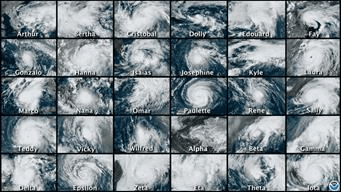
NOAA is Changing the Way It Talks about Hurricanes (Pop Sci)

Insights Into Behavior During Chimney Tops 2 Fire Could Improve Evacuation Planning (NIST)

Abundant Off-Fault Seismicity and Orthogonal Structures in the San Jacinto Fault Zone (AAAS)

8 of the Most Destructive Storms in Houston’s History (2Houston.com)

Resilience:

As Wildfires, Flooding, and Hurricanes Grow More Frequent, Climate Migration Begins (Yale Climate Connections)

Can Technology Predict Wildfires? New Systems Attempt To Better Forecast Their Spread (LA Times)

Public Health / Biosurveillance:  

More Than 1,000 Californians May Have Died from Wildfire Smoke (EM / Gov Tech) 

Janssen Seeks Up To 60,000 Adult Volunteers For Phase Three COVID-19 Vaccine Trial (Homeland Prep News)

Nearly Two-Thirds of World’s Population Stand to Benefit from COVAX Facility Commitments (Homeland Prep News)

Critical Infrastructure & Cyber:  

The Weakest Link of Global Supply Chains (HS Newswire)

Innovations & Interconnections:

There’s a New Weapon Against COVID-19. And It’s Dogs (Fast Co.) 

Predicting Coronavirus Outbreaks Using Google Searches for Gastrointestinal Problems (Pew- Rt. Fifty)

During Busy Wildfire Season (and Pandemic), S&T Focus on Sensors (DHS S&T)

Essay: Homes are Flooding Outside FEMA’s 100-Year Flood Zones, And Racial Inequality Is Showing Through (Houston Chronicle)
Resources & Articles (9/22/20)

Training & Events

The National Press Club Panel Discussion –The National Press Club holds a virtual discussion  on “the state of the world during the COVID-19 pandemic and the ongoing threats caused by climate change.”  Information on the webcast is available at https://www.press.org/events/headliners/npc-virtual-newsmaker-dr-jane-goodall  Contact: Lindsay Underwood at 202-662-7561 lunderwood@press.org

Friday, Sept. 25, 2 p.m.

Congressional Hearing: Climate Change, Part IV: Moving Toward a Sustainable Future — House Oversight and Reform / Subcommittee on Environment, “Climate Change, Part 4” Environment Subcommittee (Chairman Harley Rouda, D-Calif.) 2154 Rayburn Bldg.

  • Thursday, Sept. 24, 2 p.m.

Webinar:  Ready, Set… Activate! Advanced Risk Analytics for Wildfire & Flood in the U.S. (Carrier Mgt.) The past several years have seen increasingly severe flooding and wildfires in the US – and it’s forced the industry to rethink their approach to managing these disasters. RMS– a leading risk modeler for the insurance industry — will explore how new data and advanced risk analytics can help you to understand how to actively manage your exposure to this new (ab)normal. Whether you’re looking for profitable (re)insurance opportunities or you’re interested in understanding just how interconnected these risks are to the rest of your portfolio, join this webinar to understand how you can actively prepare for the seasons ahead.

  • Wed. Sept. 30, at 10 am PDT, 1pm EDT
Webinar: Hospital Resilience, Operational Perspectives from COVID-19 (Dom Prep) Notwithstanding 20 years of epidemiological predictions, the worldwide response to COVID-19 appeared to be panic. Not so, say four experts that share their perspectives on the response to COVID-19. Topics include  ▪    Complexity of the supply chain  ▪    Caring for the caregivers    ▪    High-impact threats to critical infrastructure  ▪    A path forward — adopting a sustainable doctrineWed, September 30, 2020  10:00 AM – 11:30 AM EDT

Resources

Case Study – Hurricane Dorian (Mutualink) Hurricane Dorian was the fourth named storm of the 2019 hurricane season, which runs from June 1 through November 30. As Dorian threatened Puerto Rico, the Virgin Islands and the Bahamas on its trajectory toward Florida, emergency managers swung into action. For many, a focus on communications and technology readiness was top of mind.

Countering False Information On Social Media In Disasters   (DHS) The internet is often a hotbed of false and inaccurate information. Agencies and organizations responsible for keeping the public safe have their work cut out for them when battling false information and, unfortunately, the problem has gotten more complex as new technologies, social media platforms and agendas emerge. The Department of Homeland Security’s Social Media Working Group for Emergency Services and Disaster Management white paper “Countering False Information on Social Media in Disasters and Emergencies” can help agencies with this issue. The white paper examines what motivates people to share bad or false information and discusses underlying issues causing false information. It looks at several real-world case studies to provide agencies several best practices to counter misinformation, rumors and false information.

COVID-19: Federal Efforts Could Be Strengthened by Timely and Concerted Actions (GAO-20-701)  GAO has identified lessons learned and issues in need of continued attention by the Congress and the administration, including the need to collect reliable data that can drive decision-making; to establish mechanisms for accountability and transparency; and to protect against ongoing cyber threats to patient information, intellectual property, public health data, and intelligence. Attention to these issues can help to make federal efforts as effective as possible. GAO has also identified a number of opportunities to help the federal government prepare for the months ahead while improving the ongoing federal response.
The PREP Act and COVID-19: Limiting Liability for Medical Countermeasures (CRS) To encourage the expeditious development and deployment of medical countermeasures during a public health emergency, the Public Readiness and Emergency Preparedness Act (PREP Act) authorizes the Secretary of Health and Human Services to limit legal liability for losses relating to the administration of medical countermeasures such as diagnostics, treatments, and vaccines. In a declaration effective February 4, 2020, the Secretary of HHS invoked the PREP Act and declared Coronavirus Disease 2019 to be a public health emergency warranting liability protections for covered countermeasures. Under the HHS Declaration, covered persons are generally immune from legal liability for losses relating to the administration or use of covered countermeasures against COVID-19. (CRS, LSB10443)

Articles

All-Hazards:

Hurricane Sally’s Major Flooding Exposes Flaws in FEMA Maps (Sci. American)

IPAWS Program Planning Toolkit New Resources (Mutualink Em Mgt News)

California May Need More Fire to Fix its Wildfire Problem (Pew: Stateline)

New Guidebooks Help Urban Communities Install Low-Cost Sensors to Reduce Flood Risks (DHS S&T)

Insurance Markets Face Challenges in Higher Fire-Risk Areas  (HS Newswire)

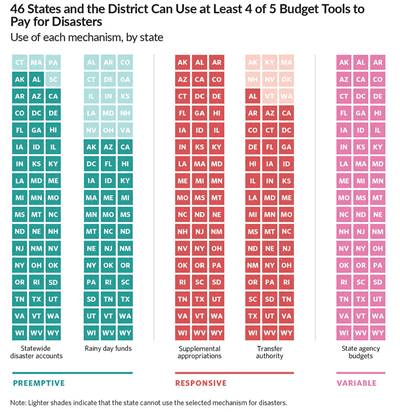
How States Can Manage the Challenges of Paying for Natural Disasters (Pew) 

https://image.pewtrusts.org/lib/fe8215737d630c747c/m/1/a797991f-f148-48be-b163-d1196a75c9ca.jpg

Resilience:

Does Experiencing Wildfires Create Political Consensus on Resilience Measures? (HS Newswire)

Public Health / Biosurveillance:

Evaluating Your Department’s COVID-19 Response (OH&S)

Federal Public Health Leaders Relay Timeline For U.S. COVID-19 Vaccine Distribution Plan  (Homeland Prep News)

Michigan Residents Urged to Stay Indoors to Avoid Deadly Mosquito-Borne Illness  (Pew: Rt. Fifty)

Critical Infrastructure & Cyber:

What the Wildfires Tell Us about the Shortcomings of California’s Electric Grid (HS Newswire)

Innovations & Interconnections:

Close Encounters: How Near Misses Influence Disaster Decision Making (Nat. Hazards Ctr)

What Is a Tipping Point, and Why Should I Care? (HS Newswire)

Articles from the week Sept 11, 2020

Articles

All-Hazards:

When Smoke Is in the Air, All Eyes Turn to This NOAA Weather Model (HS Today)

A Pandemic of Wildfire: Part 1  & Part 2 (Discover) and Humans Cause 97 Percent of Home-Threatening Wildfires (HS Newswire)

Hurricane Laura Predictions More Accurate With Better Modeling, Faster Computers (ABC News)

Did Something Burp? It Was an Earthquake (NY Times)

How Powerful Hurricanes Hasten the Disappearance of Louisiana’s Wetlands (Nat Geo)

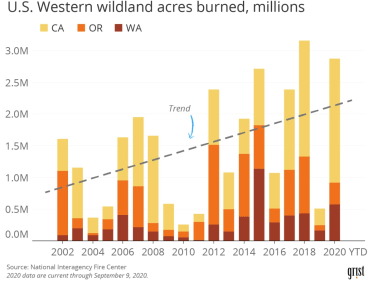
How Apocalyptic This Fire Season Is — In 1 Flaming Chart (Grist)

Resilience:

Americans Back Tough Limits on Building in Fire and Flood Zones (NY Times)

Wildfires Hasten Another Climate Crisis: Homeowners Who Can’t Get Insurance (NY Times)

Public Health / Biosurveillance:

Substantial Underestimation of SARS-CoV-2 Infection in the United States (Nature Communications)

Projected Health-care Resource Needs for an Effective Response to COVID-19 in 73 Low-income and Middle-income Countries: A Modelling Study (Lancet Global Health)

Protecting Yourself from the Health Dangers of Wildfire Smoke (EM / Gov Tech)

Survey Shows Nurses Still Having to Reuse PPE for COVID Patients (EM / Gov Tech)

State of the Nation: A 50-State COVID-19 Survey: Report #10: The Pandemic and the Protests (NPS)

DHS Transferring Ownership of National Bio and Agro-Defense Facility to USDA for Research, Vaccine Development (Homeland Prep News)

Feds cited 1 in 4 Arizona Nursing Homes During The Coronavirus Pandemic (AZCentral)

Real-time Gene Sequencing Can Help Control — and May Someday Prevent — Pandemics (STAT News)

Critical Infrastructure & Cyber:

States Experiment With Automation to Bolster Cybersecurity (Pew: Rt. Fifty)

Combatting Potential Electromagnetic Pulse (EMP) Attack (HS Newswire)

Energy Security: What’s Ailing California’s Electric System? (HS Newswire) and DHS Releases New Report On Electromagnetic Pulse Attacks (Homeland Prep News)

U.S. Agencies Must Adopt Vulnerability-Disclosure Policies by March 2021 (Threat Post)

Strained Rural Water Utilities Buckle Under Pandemic Pressure (Pew: Stateline)

Innovations & Interconnections:

Why Human Brains Are Bad At Assessing the Risks of Pandemics (The Washington Post)

Social Inflation, Low Interest Rates, Rising Catastrophes: Recipe for a Hard Re-Insurance Market (Ins. Journal)

U.S. Regulators Woke Up and Realized Climate Change Could Cause a Financial Crisis (Grist)

Articles / Resources for week of July 20, 2020

Resources

The State of High Tide Flooding and Annual Outlook (NOAA) Each year, NOAA documents changes in high-tide flooding patterns from the previous year at 98 NOAA tide gauges along the U.S. coast, and provides a flooding outlook for these locations for the coming year, as well as projections for the next several decades. High-tide flooding, often referred to as “nuisance” or “sunny day” flooding, is increasingly common due to years of relative sea level increases. It occurs when tides reach anywhere from 1.75 to 2 feet above the daily average high tide and start spilling onto streets or bubbling up from storm drains. As sea level rise continues, damaging floods that decades ago happened only during a storm now happen more regularly, such as during a full-moon tide or with a change in prevailing winds or currents.

Evidence-Based Practices for Public Health Emergency Preparedness and Response: Assessment of and Recommendations for the Field (NAS) When communities face complex public health emergencies, state local, tribal, and territorial public health agencies must make difficult decisions regarding how to effectively respond. The public health emergency preparedness and response (PHEPR) system, with its multifaceted mission to prevent, protect against, quickly respond to, and recover from public health emergencies, is inherently complex and encompasses policies, organizations, and programs. Since the events of September 11, 2001, the United States has invested billions of dollars and immeasurable amounts of human capital to develop and enhance public health emergency preparedness and infrastructure to respond to a wide range of public health threats, including infectious diseases, natural disasters, and chemical, biological, radiological, and nuclear events. Despite the investments in research and the growing body of empirical literature on a range of preparedness and response capabilities and functions, there has been no national-level, comprehensive review and grading of evidence for public health emergency preparedness and response practices comparable to those utilized in medicine and other public health fields.

Articles

All-Hazards:

Resilience:

Public Health / Biosurveillance:

Critical Infrastructure & Cyber:

Innovations & Interconnections:

Articles & resources 4/17/2020

Resources

Scams in the News – FTC Issue Warning About Coronavirus (COVID-19) Scams (GAO Notices) While the world is trying to take better care of themselves, cybercriminals are trying to seize the opportunity by creating COVID-19 scams. Here are a few tips that you should consider regarding COVID-19 scams:

·         If you receive any robocalls regarding at home techniques, do not press any buttons! Simply hang up the call.

·         Do not click on any links in emails that are advertising COVID-19 home test kits or vaccinations.

·         Be cautious with any emails that claim to be from the Centers for Disease Control and Prevention (CDC) or any expert saying they have information about the virus.

If you suspect that you have received a suspicious email at GAO, report it immediately by using the Report Phishing button in Outlook.


Community Resilience Indicator Analysis (CRIA) and Resilience Analysis and Planning Tool (RAPT) (FEMA) The Resilience Analysis and Planning Tool is available to the public. FEMA released expanded capabilities to the Resilience Analysis and Planning Tool, including census tract data and additional infrastructure layers for all state, local, tribal and territorial jurisdictions across the nation. This update to the tool enables a more granular analysis of community resilience indicators and allows users to calculate the population of individuals with specific indicator characteristics in selected census tracts.  Supporting documents and information on scheduled webinars can be found on the FEMA website.

Hospital Experiences Responding to the COVID-19 Pandemic: Results of a National Pulse Survey March 23-27, 2020  (DHS OIG) Hospitals reported that their most significant challenges centered on testing and caring for patients with COVID-19 and keeping staff safe. Hospitals said that severe shortages of testing supplies and extended waits for test results limited hospitals’ ability to monitor the health of patients and staff. They also reported that widespread shortages of personal protective equipment (PPE) put staff and patients at risk. This report is based on brief telephone interviews (“pulse surveys”) conducted March 23-27, 2020, with hospital administrators from 323 hospitals across 46 States, the District of Columbia, and Puerto Rico that were part of our random sample. Our rate of contact was 85 percent.

Emergency and Disaster Management Case Study: Standing Panel on Intergovernmental Systems, March 2020; National Academy for Public Administration (NAPA).  The NAPA study articulates what has been learned from past experiences to inform the necessary transformation of roles and restructuring of responsibilities to support emergency management systems that can realize the objectives of effective and efficient prevention, preparedness, response and recovery to the broadest array of natural disasters possible. Also see FY19_ALL_STAFF-#1489088 in our EM CoP Resources folders.

IBM Watson Assistant for Citizens Answers COVID-19 Questions (Governing) To help agencies address situations, IBM has specifically designed a virtual assistant, Watson Assistant for Citizens, that is pre-loaded to understand and respond to common questions about COVID-19 directly leveraging CDC guidance. Additionally, agencies can customize unique intents leveraging other important information–via voice calls and digital text channels–to quickly help citizens get answers and stay informed.

FEMA Releases BRIC Policy for Comment (FEMA) The Federal Emergency Management Agency (FEMA) is accepting comments on the Building Resilient Infrastructure and Communities Policy. This policy describes a new program authorized by recent legislation that allows FEMA to set aside 6 percent of estimated disaster expenses for each major disaster to fund a mitigation grant program to assist States, territories, Tribes, and local governments. The new program would supersede the existing Pre-Disaster Mitigation grant program and would promote a national culture of preparedness through encouraging investments to protect communities and infrastructure and strengthening national mitigation capabilities to foster resilience.  A copy of FEMA’s policy is in the EM CoP Resources folder, DM file # FY19_ALL_STAFF-#1504931


Articles

All-Hazards:

·         Compliance Considerations for Companies and Individuals Donating Funds, Goods, or Services to Domestic Government Entities (Inside Political Law)

·         Pa. Only Shares COVID-19 Information with Some Counties (Governing)

·         Cities Are Flouting Flood Rules. The Cost: $1 Billion (NY Times)

·         He Spent $500,000 to Buy Coronavirus Tests. Health Officials Say They’re Unreliable (Rt. Fifty)


Resilience:

·         FEMA Publishes Stakeholder Feedback For New Pre-Disaster Hazard Mitigation Program (IAEM)

·         Firefighters Say Coronavirus Will Obstruct Emergency Service, Evacuations As Wildfire Season Closes In (CNBC)

·         How Can Big Cities Adapt To Risks Of Floods? (Euronews)


Public Health / Biosurveillance:

·         Black Americans Face Higher Rates of Coronavirus Infection (Rt. Fifty)

·         Competing Hospitals Cooperate to Meet the Crisis (Pew Stateline)

·         Exercise in 2018 Informing Washington’s Coronavirus Crisis-Care (EM/Gov Tech)

·         Animal Viruses Are Jumping to Humans. Forest Loss Makes It Easier (NY Times)


Innovations & Interconnections and Deep Thoughts:

·         How Do We Ration Health Care When We Really Have To Do It? (EDM Digest)

·         New Mathematical Models May Help Us Predict The Spread Of Future Epidemics (BBC Science Focus)

·         Small, Mid-Sized Cities Currently Cut Out of Direct Coronavirus Funding (Rt. Fifty)


Article: Outgrowing growth: why quality of life, not GDP, should be our measure of success

Outgrowing growth: why quality of life, not GDP, should be our measure of success https://flip.it/a-h3W2

My thinking about GDP [growthism] is as a method akin to single-entry calculations without regard to whether it improves lives or reflects spending in response to the negative life experiences (war, violence, morbidity)

Article: The economic crisis from the coronavirus could lead to ‘disaster socialism’ that briefly extends basic social benefits other countries already have

The economic crisis from the coronavirus could lead to ‘disaster socialism’ that briefly extends basic social benefits other countries already have https://flip.it/-o0WzV

Food for thought/ academic question. …a fuller definition of “disaster”

Given what we are seeing in the AUS brushfires, do we need to start considering threats of species extinction when we determine what is a “major disaster” or catastrophic events?   Currently, when we talk about what is a disaster, we  quantify it through human impacts: a) deaths b)injuries, c) evacuees, d) $ amt of property damage.  If yes, then the question is how do we calculate impacts on species, and who might do that (ie – Nat Fish/Wildlife in the US)?

Saying the phrase “extinction event” is still theoretical to the general public, but may not be in 2-5 yrs. It may make sense to start to develop definitions for and ways to measure these consequences, then incorporate them into our Risk calculations.