As the holidays approach, many across the country are beginning to plan for holiday celebrations and small gatherings. To help minimize risk and prevent the spread of COVID-19, CDC has released considerations for Holiday Celebrations and Small Gatherings. The considerations were updated to reflect small and informal gatherings of family and friends from across multiple households that often occur during the holiday season. The Thanksgiving tip sheet is a resource to help people take steps to make their Thanksgivings safer.
Training & Events
Disaster Resilience Framework — The seminar is now posted to GAOTV (GAO) The Disaster Resilience Framework seminar provides an overview of the framework as well as the tools for using it in GAO’s engagements. In October 2019, GAO issued the Disaster Resilience Framework (GAO-20-100SP) to serve as a guide for analyzing federal actions to facilitate and promote resilience to natural disasters. The framework is intended to help managers across government explore opportunities to promote disaster resilience and reduce the mounting costs associated with the federal response to climate and weather disasters.
Webinar: Large Area Flood, Steep Creek, and Landslide-Dam Flood Risk Prioritization — Association of GeoHazard Professionals (Canada) – Mountainous regions are frequently subject to geohazards that cause property damage, loss of life, and the interruption of transportation arteries. Of the many thousands of hazard areas, only a tiny fraction receive a full risk management cycle from hazard identification to risk control. Since development exists within these geohazard susceptible expanses, communities require support to make risk-informed decisions about regulation, mitigation, and emergency management. This webinar will present approaches to prioritize geohazard risk across large and typically data-scarce regions like British Columbia and discuss how their results support development planning, regulation, and emergency management.
- Tuesday, November 24, 2020 | 2:00 pm – 3:00 pm ET
Considerations for a Post COVID World: An Interview with Brock Long (DRJ) Brock Long, the former Administrator of the Federal Emergency Management Agency (FEMA), will provide his insights, recommendations, and predictions about what 2021 and beyond will look like, along with his advice on how your company can properly prepare.
- Thursday, December 3, 2020 @ 12:00 PM ET
COVID-19 Scientific Quarterly: Contact Tracing (GAO) The purpose of this presentation is to provide an overview of contact tracing. As a disease control strategy, contact tracing is most useful when there are sufficient tests, resources, and a low number of individuals with the disease. Additionally, effective listening and interviewing skills are key to successful contact tracing. This presentation is intended to enhance the understanding of contact tracing for GAO staff members
- Thursday, December 3, 1:30 – 3:00 pm (ET)
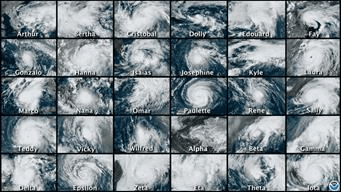
Hurricane Season 2020 and Adaptation Lessons Learned (Bipartisan Policy Center) This hurricane season has been extraordinarily active with 30 named storms, including 13 hurricanes, ensuring that 2020 is just the latest in a handful of recent, record-setting seasons. Climate change has been increasing Atlantic hurricane activity for years, producing storms that are collectively stronger, wetter, and slower-moving over populated coastlines. To bring down costs, speed up recovery efforts, and ultimately improve the lives of those impacted by natural disasters, we must be smarter about how communities plan and rebuild. Join BPC as we look back at the 2020 hurricane season and assess lessons learned to make us more prepared for a stormy future.
- Thursday, December 3, 2020 1:30 PM to 2:30 PM
Working with Indigenous Communities After a Disaster: Focus on South Dakota (CDI) In this webinar, three Indigenous leaders – all grantees of the Center for Disaster Philanthropy’s Midwest Early Recovery Fund Tribal Communities Disaster Recovery Program – will share their experiences in disaster recovery, explain how needs differ in their communities and share best practices for working together respectfully in ways that honor culture and land.
- Thursday, December 3 at 2 p.m. ET
GAO Cyber COP Newsletter – November 2020 (GAO) WELCOME to the first edition of the Cyber COP Newsletter! This newsletter will help you stay top of COP events and learning, as well as external training opportunities in the following sections: COP Events and News, Cyber Information Sharing Group meetings, and Training Opportunities. Newsletters are sent out to the Outlook group #CyberCOP_Members@gao.gov
Also see the Cybersecurity COP wiki for an often-updated (and sortable) list of GAO’s cybersecurity-related reports since 2016, as well as the ITC team’s current list of cybersecurity-related engagements.
Reminder: FEMA Releases National Risk Index (FEMA) The Federal Emergency Management Agency (FEMA) releases an online mapping application to analyze risk factors from 18 natural hazards in addition to expected annual losses, social vulnerability and community resilience. The tool is free and easy to use, and data from the site is available for download. FEMA is developing a comprehensive National Risk Index application to release later in 2021. Visit FEMA’s National Risk Index webpage to learn more about the data and the natural hazards that can affect your community.
Updated COVID-19 Medical Staffing Requests Advisory: FEMA has updated its medical staffing requests advisory with 12 actions items for State, local, and territorial governments to address. As a reminder, all requests to the Federal government must be formally communicated by your state emergency manager to your FEMA Regional Administrator. This is the same process as natural disasters (e.g., hurricane recovery, flood recovery, tornado recovery, etc.). If you have specific needs, please reach out to your State or local emergency manager.
Disasters and Religion App Helps Emergency Managers (NDIN) The Disasters & Religion App helps disaster responders better serve America’s diverse religious communities and build partnerships with religious leaders, with easily accessible religious literacy and competency information on 27 unique religions. It also offers Tip Sheets on Mass Care considerations for different faith communities; 16 Tip Sheets on partnering with faith communities in disasters; and 26 Tip Sheets on equipping religious leaders about disaster preparedness through the Be a Ready Congregation program It was created by the National Disaster Interfaiths Network (NDIN), New York Disaster Interfaith Services (NYDIS), and the University of Southern California Center for Religion and Civic Culture (CRCC).
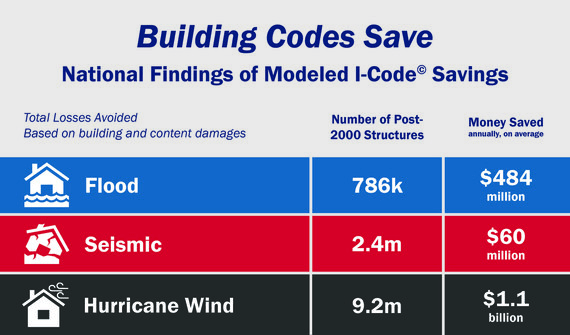
Building Codes Save: A Nationwide Study (FEMA) Using big data, FEMA’s modeling of the 18.1M buildings constructed in the United States since 2000 has found that the nation has benefited to the tune of $1.6 billion in savings each year. These savings represent the cumulative losses avoided from property damage associated with using the International Codes or similar building codes during floods, hurricane, and earthquakes. FEMA projects that, by the year 2040, the nation will save around $3.2 billion in savings per year. This adds up to almost $133 billion in total losses avoided from 2000 to 2040.
Articles
All-Hazards:
After Camp Fire, Paradise, CA, Works on Long-Term Recovery (EM /Gov Tech)
Rule of Law During Pandemics (Peacekeeping and Stability Operations Institute)
Building a Data-Driven Culture in Emergency Management (Dom Prep)
A Provocative Idea for Naming Atlantic Hurricanes That Just Might Work (Forbes)
The Alaska Tsunami That Can’t Be Stopped (The Atlantic)
Flood Sensors Drive Predictive City Management in North Carolina (GCN)
Report: The Disaster Relief Fund: Overview and Issues (CRS)
Resilience:
Systems Thinking Helps Build Resilience in Post-COVID Food Supply Chains(FoodSafety)
Equitable Retreat: The Need for Fairness in Relocating Coastal Communities (Yale Environment)
Public Health / Biosurveillance:
States That Imposed Few Restrictions Now Have the Worst Outbreaks (NY Times)
State of the Nation: A 50-State COVID-19 Survey Report #23: Depression Among Young Adults (HSDL)
Questions Persist over Face Mask Efficacy (HS Newswire)
Some Places Were Short on Nurses Before the Virus. The Pandemic is Making it Much Worse. (Washington Post)
Mauritania Rift Valley Fever Outbreak Update and Chapare Virus in Bolivia 2019: New Evidence Shows Human-to-human Transmission (Outbreak News Today)
Risk Perception Studies Could Improve Pandemic Response (Governing)
Frequent, Rapid Testing Could Turn National COVID-19 Tide within Weeks (Harvard)
Critical Infrastructure & Cyber:
‘Catastrophic Problem’ Looms In 110-Year-Old Hudson River Rail Tunnel If Fixes Aren’t Made (NBC NY)
ACI World Calls for Airport Recovery Plans to Include Climate Change Efforts (International Airport Review)
Innovations & Interconnections:
The Growth Equation of Cities (Nature)
National Consortium on Preventing Law Enforcement Suicide Final Report (IACP) and Disasters Leave a Rise in Suicides in Their Wake: Study (US News) and The Human Costs Of The Pandemic: Is It Time To Prioritize Well-Being? (Brookings)

 From Brassville to... (working title)