Have a Safe and Healthy Holidays!!
As the holidays approach, many across the country are beginning to plan for holiday celebrations and small gatherings. To help minimize risk and prevent the spread of COVID-19, CDC has released considerations for Holiday Celebrations and Small Gatherings. The considerations were updated to reflect small and informal gatherings of family and friends from across multiple households that often occur during the holiday season. The Thanksgiving tip sheet is a resource to help people take steps to make their Thanksgivings safer. These considerations complement other resources to help minimize risk and keep family, friends, and communities safer.
CDC and the CDC Foundation have also provided resources to address stress and coping, and for parents and caregivers to help protect children and young people’s social, emotional, and mental health.
Finally, if you or loved ones are traveling, please check the state you are going to for any updates to that state’s COVID restrictions.
Training & Events
“Mitigation Misery – Practical Tools for Floodplain Managers” (NHMA) The Natural Hazard Mitigation Association and FEMA Region 6 is holding a brownbag to discuss flood mitigation with Edward Thomas Esq.–Fellow of the American Bar Association (ABA) Foundation, member of the ABA Disaster Response and Preparedness Committee and Vice-Chair of the ABA State and Local Government Law Section’s Resilience Task Force. During his career in HUD and FEMA, Ed worked closely with individuals, companies, non-profit organizations local communities developing safe and affordable housing, and results oriented Floodplain Management and Hazard Mitigation. He worked closely with disaster survivors on about two hundred disasters and emergencies, serving as the President’s representative, the Federal Coordinating Officer (FCO), dozens of times.
- Tuesday, November 17, 2020, 1 – 2pm ET
COVID-19 Vaccine Update: Development, Approval, Allocation and Distribution in the U.S.—(National Academy of Medicine) The fifteenth COVID-19 Conversations webinar, scheduled for November 18, 2020 at 5pm ET, will discuss the path to a COVID-19 vaccine, including steps forward in development, approval, allocation and distribution in the U.S. The webinar will begin with an introduction from the session’s moderator, Margaret (Peggy) Hamburg, former FDA commissioner, and then feature a conversation with a panel of experts, including: Larry Corey, President and Director Emeritus, Fred Hutch; James Hildreth, President & CEO, Meharry Medical College; Marion Gruber, Director, Office of Vaccines Research & Review, Center for Biologics Evaluation and Research, U.S. Food and Drug Administration; and Jay Butler, Deputy Director for Infectious Diseases, Centers for Disease Control and Prevention. The panel discussion will be followed by a Q&A session with the webinar audience.
- Wednesday, November 18, 2020 5-6:30pm ET (requires pre-registration)
A Nation Unprepared: Incomplete Implementation of the National Blueprint for Biodefense— Virtual Meeting of the Bipartisan Commission on Biodefense — The Commission will assess the national response to COVID-19 as those activities relate to the recommendations of their 2015 Blueprint, and better understand federal efforts to enhance national biodefense.
- Monday, November 30, 2020 10:00am – 3:30pm ET
FEMA releases draft ‘Building Private-Public Partnerships Guide’ for public comment (IAEM)FEMA is seeking content input from community partners on the “Building Private-Public Partnerships Guide” draft document. The agency will host a series of 60-minute engagement webinars to discuss the Guide and answer stakeholders’ questions. The purpose of the review is to provide an opportunity for the public to provide substantive content recommendations and refinement of the draft. The webinars will be open to the whole community and advance registration is required. To register, click on the preferred webinar session below.
Webinar: Urban Flood Hazards: Challenges and Opportunities (NHMA) The Georgia Association of Floodplain Management (GAFM) No Adverse Impact (NAI) Committee, in conjunction with the ASFPM NAI Committee, and hosted by Michael Baker, International Inc.
- Wednesday, December 2, 2020 @ 12:00 p.m. – 1:00 p.m. EDT
Webinar: Federal Alliance for Safe Homes 2020 Review – 2021 Outlook (FLASH) Hear from FLASH President and CEO Leslie Chapman-Henderson and Executive Vice President Eric Vaughn about recent events and milestones in the disaster safety and resilience movement and how current and future partners can drive meaningful change through new collaboration opportunities. FLASH had planned to offer the 2020 National Disaster Resilience Conference (NDRC) in a traditional, in-person format. However, we have postponed it until December 2021 due to current conditions.
- Thursday, December 3 at 2:00 p.m
Webinar: 5G is Here! How Will This Impact Emergency Communications? (CISA) The rapid rate of technology advancement continues to outpace the public safety community acquisition cycle. The arrival of 5G – the fifth-generation technology standard for cellular networks – is one example. It is envisioned that 5G will have the potential to enhance operations, support information-sharing, improve efficiency and response time, augment security, and increase capacity for more connected devices. This webinar will identify actions organizations can take to prepare for the implementation of new solutions like 5G.
- Wednesday, December 8 at 1:00 p.m.
Resources
New Report Details Approach for Rapid Development of Innovative Diagnostic Tests for COVID-19 and Other Infectious Diseases In a new special focus report released today, Diagnostics for Biodefense – Flying Blind with No Plan to Land, the Bipartisan Commission on Biodefense provides an approach that would ensure the United States can rapidly develop innovative point-of-care and point-of-need diagnostic tests for COVID-19 and other novel, emerging, and reemerging infectious diseases when they occur. The report contains recommendations for both the Executive and Legislative Branches of the government. In accordance with Recommendation 30 of the Commission’s baseline 2015 A National Blueprint for Biodefense, the report calls for the development of a national plan for testing, recommending that Congress amend the CARES Act of 2020 to direct the Secretary of Health and Human Services, in coordination with the Secretary of Defense, to establish a new task force to develop innovative rapid diagnostic solutions and scale up testing dramatically across the Nation, eliminate supply chain disruptions, and pursue advances in diagnostic technology.
Congressional Research Service (CRS) released the following COVID-19-related reports:
- Homelessness and COVID-19 (CRS) People experiencing homelessness are at increased risk of contracting and spreading Coronavirus Disease 2019 (COVID-19). Since the onset of the COVID-19 pandemic, there have also been concerns that the number of people experiencing homelessness could increase. Unemployment rates grew as some industries, including restaurants, retail, and hospitality, essentially shut down for varying periods of time. The economic effects of the COVID-19 pandemic have been greater for low-income workers, renters, and minority households.
- Vaccine Safety in the United States: Overview and Considerations for COVID-19 Vaccines (CRS) In light of reported concerns from the public surrounding the safety and effectiveness of COVID-19 vaccines developed on an expedited timeline, FDA officials have sought to clarify that any vaccine candidate “will be reviewed according to the established legal and regulatory standards for medical products.” If made available within the next several months, available safety and effectiveness data would be based on months of data collection rather than on years of data collection typically used in vaccine development. In addition, efforts are underway with regard to (1) clinical guidance and prioritization of individuals to receive the likely limited initial supply of COVID-19 vaccines; (2) strengthening safety monitoring systems to collect ongoing safety surveillance data on vaccines administered to the population; and (3) preparing for safety controls in vaccine distribution and patient administration, in addition to other activities.
- COVID-19: Potential Implications for International Security Environment—Overview of Issues and Further Reading for Congress (CRS) Observers who argue the COVID-19 pandemic could be world-changing for the international security environment and the US role in the world have focused on several areas of potential change, including the following, which are listed here separately but overlap in some cases and can interact with one another. Issues for Congress may include whether and how the COVID-19 pandemic could change the international security environment, whether the Trump Administration’s actions for responding to such change are appropriate and sufficient, and what implications such change could have for the role of Congress in setting and overseeing the execution of US foreign and defense policy.
Guiding Principles for Emergency Management on Cyber Security (NEMA) The cascading impacts of a cybersecurity incident during the COVID-19 response have reinforced the need to ensure state government enterprises are secure and resilient in the face of cyber threats. To that end NEMA, the Department of Homeland Security Cybersecurity and Infrastructure Security Agency (DHS CISA), and Auburn University’s McCrary Institute partnered to develop a document that outlines guiding principles for emergency management executives around cybersecurity. The Guiding Principles for Emergency Management on Cyber Security addresses the three essential elements to an effective cybersecurity posture: leadership, culture, and strategy.
“Attacks Tracker” of Jihadist Motivated Terrorist Attacks (GWU) The George Washington University Program on Extremism (PoE) released a tracker monitoring jihadist motivated terrorist attacks in Europe and North America. The tracker is based on a database maintained by the PoE and includes data since 2014. Initial findings include that 75 percent of attacks were perpetrated in Europe, and 71 percent of attackers were known to authorities prior to the attack taking place. The year with the most terrorist attacks recorded was 2017, but 2020 has had more than double the number of incidents as 2019.
Articles
All-Hazards:
First Responders: Cloud-Based Framework Improves Efficiency in Disaster-Area Management (HS Newswire)
Climate Change Intensifies Tsunami Threat in Alaska (Hi Country News)
USFA Logs Lowest Annual Count in 2019 Firefighter Fatalities Report (FEMA / USFA)
Study Projects More Rainfall in Florida During Flooding Season (Phys.org)
Obstacles to Timely Emergency Messaging For Acute Incidents (Journal of EM)
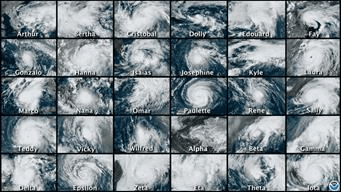
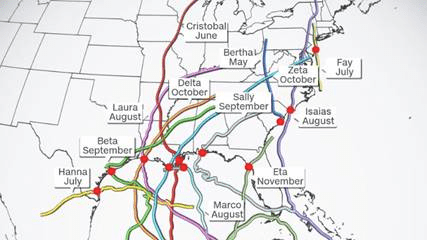
As the Oceans Warm, Hurricanes Stay Stronger Longer (Sci. American)
Resilience:
Climate Change Will Make Parts of the U.S. Uninhabitable. Americans Are Still Moving There (ProPublica)
The Next COVID Dilemma: How to Make Buildings Breathe Better (WIRED)
Preserving Cultural and Historic Treasures in Changing Climate May Mean Transforming Them (The Conversation)
Public Health / Biosurveillance:
NIH to Study How Much (More) Americans Are Drinking Alcohol During Pandemic (Pew: Rt. Fifty)
Epidemics: Odds and Evens: A Strategy for Safely Exiting Lockdown 2 (HS Newswire)
Coronavirus FAQ: Could COVID-19 Ever Be Considered A Preexisting Condition? (NPR)
Nurses in Every New Haven School as Frontline Against COVID (EM / Gov Tech)
Epidemic: Shielding the Vulnerable Using a Risk Calculator – Here’s Why It Won’t Be Enough (HS Newswire)
Invasive Weed Found in Michigan Grows Six Inches a Day (Pew: Rt. Fifty)
Critical Infrastructure & Cyber:
Food Security: Nuclear War Could Take a Big Bite Out of the World’s Seafood (HS Newsire)
National Guard to Help Vermont Health Network After Cyberattack (Infosecurity)
Innovations & Interconnections:
Epidemic: Putting Games to Work in the Battle Against COVID-19 (HS Newsire) and Storytelling—Plots of Resilience, Learning, and Discovery in Emergency Management (Journal of EM)
Disaster ‘Prepping’ Was Once An American Pastime. Today, It’s Mainstream Again. (Nat Geo)
More Economic Worries Lead to Less Caution about COVID-19 (HS Newsire)

 From Brassville to... (working title)