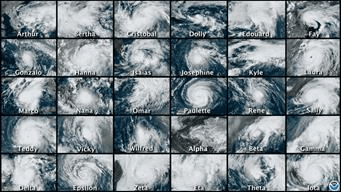
For National Preparedness Month, FEMA has weekly themes focusing on different aspects of preparedness, including emergency planning, saving early for unexpected costs of disasters, and community preparedness efforts. This week, the theme deals with the importance of youth preparedness on building cultures and communities of preparedness. FEMA released two important resources, including a podcast and the launch of the updated Kids Prepare webpage. The updated website is a one-stop shop with interactive search features, tools and resources to help engage kids and young people on emergency and disaster preparedness. It also includes games and activities for kids to teach them about being prepared for disasters. Check it out and make sure to share with your kids! We especially enjoyed the Prepare with Pedro activity book.
News & Publications
Banks Worth $47 Trillion Adopt New U.N.-Backed Climate Principles (Rueters) Banks with more than a third of the assets of the global industry, adopted new U.N.-backed “responsible banking” principles to fight climate change on Sunday that would shift their loan books away from fossil fuels. “These principles mean banks have to consider the impact of their loans on society – not just on their portfolio,” according to the United Nations Environment Finance Initiative.
Integrating Jurisdiction Plans (Dom Prep) Many emergency managers consider the emergency operations plan (EOP) the foundation of emergency and disaster plans, but the Comprehensive Preparedness Guide 101 (CPG 101) acknowledges that it is not the only plan that supports emergency management within a jurisdiction.
Zero-Carbon Cities Could Be Worth $24 Trillion (Coalition for Urban Transitions) A new report finds that if cities worldwide transitioned to zero-carbon, the worldwide benefits would be enormous: nearly $24 trillion in economic returns, millions of jobs, and better health
‘Sonic Weapon’ Used On Diplomats In Cuba May Have Been Pesticide, Study Finds (Fox) The mysterious high-pitched buzzing sound associated with the so-called “sonic attacks” on nearly 40 U.S. and Canadian diplomats living in Cuba may have been caused by a neurotoxic agent used to kill mosquitoes, a new study commissioned by the Canadian government claims.
30 Years After Hugo, South Carolina Danger Zones Are More Built-Up (The State.com) Despite causing $7 billion worth of damage on Sept. 21-22, 1989, Hurricane Hugo did little to discourage new or more intense development on many stretches of South Carolina’s coast. More people than ever are living in the path of storms and rising seas.
We Cannot Plan For Disaster Recovery Based On Unpredictable Federal Aid (The Hill)
Flood the Market: What to do with Houston’s Perpetually Flooded Homes (Grist)
‘We cannot wait.’ Sinking Alaska village Finds New Home (E&E news)
Wildfire Risks Spark a Move to Microgrids in California (Future Structure)
This Tech Could Completely Change How We Predict Volcanic Eruptions (Pop Mechanics)
Device Offers a Way to Communicate During Disasters (Nextgov)
Federal Flood Policy Is, and Isn’t, Addressing Climate Change (Curbed)
Former Emergency Managers: Act Now Before the Next Storm (Rt. Fifty)
Types of Information Compromised in Breaches of Protected Health Information (Annals of Internal Medicine)
Training & Professional Development
Webinar: How Cities Are Paying for Climate Resilience (Security and Sustainability Forum) Join city leaders, authors of the recent report “How Cities Are Paying for Climate Resilience: Playbook 1.0,” and professionals supporting resilience in hundreds of cities around the globe to explore the strategies that reflect the leading-edge of urban climate-resilience financing practices
- Date/time: Thursday, Oct 10, 2019 1:15 PM – 2:45 PM EDT
- conference line 1.866.687.4175 — Attendee passcode: 6210397
- To attend online: https://go.foodshield.org/?1Pyk3ODI
Webinar: “How To: Next Generation Emergency Response (Rt. Fifty) Route Fifty will explore the role information gathering and sharing across both traditional and new platforms such as social media play in emergency response and take a deep-dive into the technologies enabling state and local governments to better prepare for and respond to disasters.
- Date/time: Thurs, Oct 10, 2019 2:00PM – 3:00 PM EDT REGISTER
Key Resources
Executive Order on Modernizing Influenza Vaccines in the United States to Promote National Security and Public Health (White House)
A World At Risk: Annual Report on Global Preparedness For Heath Emergencies (Global Preparedness Monitoring Board / World Health Organization) The Board commissioned seven review papers that explore the challenges of preparedness through various lenses: governance and coordination; country preparedness capacities; research and development; financing; enhancing community engagement and trust; preparing for and managing the fallout of a high-impact respiratory pathogen pandemics; and lessons learned and persistent gaps revealed by recent outbreaks of Ebola virus disease in Africa.

 From Brassville to... (working title)